President Donald Trump has moved to grant American oil companies access to Venezuela's vast petroleum reserves following a U.S. military operation that removed President Nicolás Maduro from power, bypassing new congressional authorization and igniting debate over executive authority, war powers and global energy politics.
The decision follows a rapid escalation in U.S.-Venezuela tensions that culminated in the capture of Maduro and his wife, Cilia Flores, by U.S. forces in Caracas and their transfer to the United States to face federal charges related to narcotics trafficking and terrorism conspiracies, according to official statements and contemporaneous reporting.
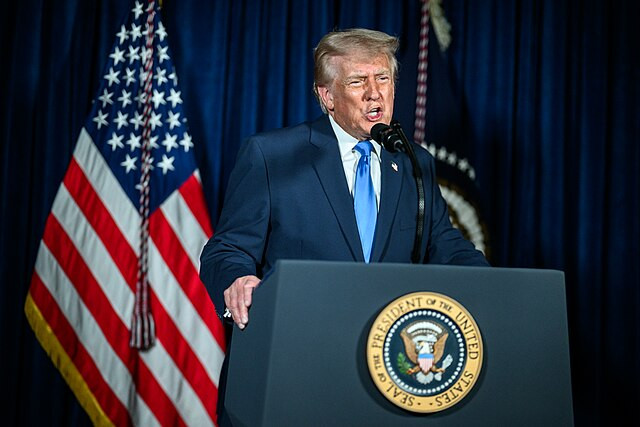
Speaking after the operation, Trump framed Washington's role as transitional and explicitly tied Venezuela's recovery to American corporate involvement. He said the United States would "run the country until such time as we can do a safe, proper and judicious transition," positioning U.S. oil firms as central actors in restoring the nation's collapsing energy infrastructure.
At a subsequent appearance, Trump was more direct about the commercial implications, stating that American companies would "go in, spend billions of pounds fixing the badly broken infrastructure and start making money for the country." The remarks signaled a shift from sanctions-driven isolation to direct economic penetration, without a corresponding vote or authorization from Congress.
Secretary of State Marco Rubio later sought to narrow the scope of U.S. governance ambitions, saying the administration did not intend to govern Venezuela outright. He emphasized, however, that an "oil quarantine" on sanctioned tankers and continued leverage over the energy sector would remain central to U.S. policy.
Legal scholars and former government officials say the sequence of actions raises constitutional questions. While presidents have historically exercised broad latitude in sanctions and foreign policy, military action combined with post-conflict economic control has typically required congressional consultation or approval. Critics argue that linking regime removal to resource access risks blurring the line between law enforcement, warfare and economic coercion.
Venezuela's strategic value is substantial. The country holds the world's largest proven oil reserves, estimated at roughly 17% of global totals, though production has fallen sharply after years of sanctions, underinvestment and mismanagement. Trump's comments suggest a reorientation of U.S. policy from restricting Venezuelan oil flows to facilitating American-led redevelopment.
Key background points include:
- Venezuela's oil sector has operated under sweeping U.S. sanctions for years, enforced through Treasury Department rules and executive orders.
- Earlier in 2025, Trump revoked licenses that had allowed Chevron to operate in Venezuela, citing unmet political conditions.
- Subsequent discussions focused on limited authorizations that would avoid direct financial benefits to the Maduro government.