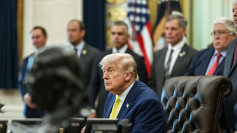
President Donald Trump agreed to review the scale of federal immigration enforcement in Minnesota after a direct call with Gov. Tim Walz, marking a sharp de-escalation in a confrontation that intensified following two fatal shootings involving federal agents in Minneapolis. The conversation, held Monday, Jan. 26, 2026, came amid national scrutiny over the death of Alex Pretti, a 37-year-old nurse killed during a federal operation, and mounting political pressure on the White House.
The White House confirmed the call and said Trump described it as "productive," signaling a pivot from weeks of public confrontation to direct engagement. According to Walz's office, the president agreed to "look into" reducing the number of federal immigration agents operating in the state, a move framed as a response to local concerns rather than a retreat from federal enforcement priorities.
The shift followed the Jan. 24 killing of Pretti, who was shot in the back by federal agents during a confrontation involving protesters. Video footage later showed a Customs and Border Protection agent firing the fatal shot, an incident that became the second death of a U.S. citizen linked to immigration enforcement actions in Minneapolis this month.
The earlier case involved Renee Nicole Good, an unarmed woman who was shot by an ICE officer during a separate operation. Together, the deaths triggered protests, bipartisan criticism, and renewed questions about federal use-of-force tactics and coordination with local authorities.
In the call, Trump emphasized that the mission in Minnesota was not ending. Walz's office said the president stated the governor "respectfully understood" that the administration remains focused on detaining "any and all criminals" in state custody. Walz, in turn, reminded the president that Minnesota already notifies ICE when non-citizens are released from prison, pushing back on prior White House claims of "hostile resistance."
As part of the recalibration, Trump appointed "border czar" Tom Homan to oversee federal activity in Minnesota, effectively sidelining Border Patrol commander Gregory Bovino. Senior officials confirmed Bovino would depart the state shortly after the call, though the Department of Homeland Security disputed claims that he had been formally relieved of duty.
Minneapolis Mayor Jacob Frey, who also spoke with Trump, said federal agents would begin leaving the Twin Cities as early as Tuesday, Jan. 27. Walz said local leaders were seeking a return to "coordinated law enforcement" after what he described over the weekend as "fear and chaos" caused by the federal presence.
Walz's office later said Trump agreed to allow Minnesota to conduct its own investigation into the Pretti shooting, directing the Department of Homeland Security to cooperate with state authorities. That concession addressed one of the governor's central demands after state officials said they were initially blocked from fully investigating the incident.