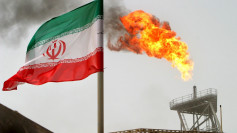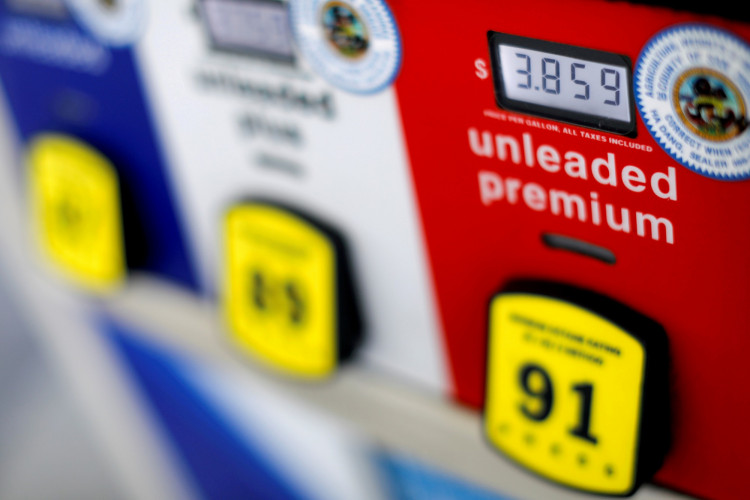
President Donald Trump dismissed the recent surge in U.S. gasoline prices as a temporary disruption linked to the escalating war with Iran, even as the national average reached $3.58 per gallon on March 11, according to data from AAA, reflecting a rapid rise triggered by turmoil in global oil markets.
The spike comes after U.S. and Israeli military operations against Iranian targets intensified in recent weeks, raising fears of supply disruptions in the Strait of Hormuz, a narrow maritime corridor that carries a large share of the world's crude oil shipments. Energy traders reacted quickly to the heightened geopolitical risk, pushing U.S. crude oil prices above $100 per barrel for the first time since Russia's invasion of Ukraine in 2022.
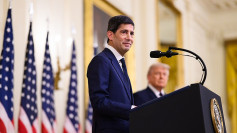
Speaking to ABC News, Trump argued the jump in fuel prices would prove short-lived once the conflict stabilizes.
"I think it's fine. It's a little glitch. We had to take this detour," Trump said.
The president's remarks come as gasoline prices have climbed sharply across the United States in a matter of days. Data from AAA show the national average price at the pump has increased by more than 50 cents in roughly one week, rising from around $3.20 to $3.58 per gallon.
Key figures cited by energy analysts include:
- $3.58 - U.S. national average gasoline price on March 11
- $3.20 - approximate average price one week earlier
- $2.94 - average price during the same period last year
For many consumers, the increase has become an immediate household expense rather than an abstract economic indicator.
Energy economists say the rapid rise reflects a well-known market dynamic in which gasoline prices respond quickly to crude oil increases. Alex Jacquez, chief of policy and advocacy at the Groundwork Collaborative and a former official at the White House National Economic Council, said the connection between oil markets and retail fuel prices tends to be direct and swift.
"The passthrough from higher oil prices to higher prices at the pump is quick and direct," Jacquez said.
Jacquez noted that the increase already seen at gas stations could continue if geopolitical tensions remain unresolved.
"We've already seen gas prices jump more than 50 cents in just over a week as oil prices climb higher, and without an end to the war in sight, they're likely to go higher," Jacquez said.
He described the pattern using a common phrase within the energy sector.
"We call the gas price phenomenon 'rockets and feathers.' They're quick to shoot up when oil prices rise, but slow to fall after oil prices drop."
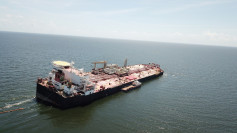
At the center of the price volatility is the Strait of Hormuz, one of the world's most critical energy chokepoints. Roughly 20 million barrels of oil per day typically pass through the strait, linking major Gulf producers to global markets.
Jacquez said traders are closely monitoring shipping activity through the narrow waterway.
"The only thing to watch right now is passings through the Strait of Hormuz," Jacquez said.
He added that market stability will depend less on political messaging than on whether energy shipments can move safely through the region.
"No matter if Trump says the war is ending or that it's safe for tankers to travel, if Iran continues to threaten ships passing through the Strait, oil prices will continue to climb," Jacquez said.
Reports that Iranian forces may have deployed naval mines or threatened tanker traffic have further unsettled markets. Some analysts warn that prolonged disruptions could tighten global supply and keep crude prices elevated.
Beyond the energy market impact, gasoline prices have long carried political significance in U.S. domestic politics because they are among the most visible economic indicators for consumers.
"Gas prices are highly visible, salient prices that consumers use to set their inflation expectations," Jacquez said.
The issue could carry additional weight as the 2026 U.S. midterm elections approach. Rising energy costs often influence voter perceptions of economic management and foreign policy decisions.
Jacquez argued that the economic fallout from the Iran conflict could quickly translate into political pressure for the administration.
"Trump knows that high gas prices will be devastating for Republicans in the midterms," he said.
Citing polling conducted by his organization, Jacquez added: "Our poll shows 87 percent of voters are concerned that Trump's war in Iran will raise prices - and they're right. Trump promised 'no more wars' and to put America first, but instead of lowering utility bills, grocery prices, and health care costs here at home, he's dragging the US into another costly foreign war."