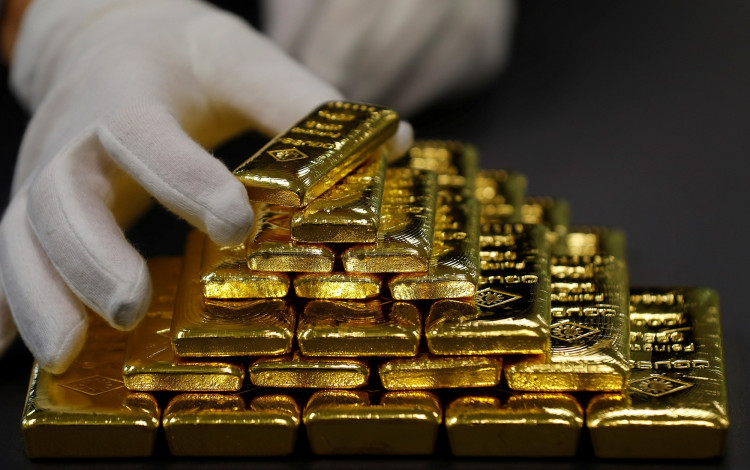
France has completed a complex gold reserve operation involving the sale of 129 tonnes of bullion held at the Federal Reserve Bank of New York and the repurchase of equivalent holdings in Europe, allowing the Banque de France to consolidate all 2,437 tonnes of its reserves domestically while generating an estimated $15 billion gain.
The transactions, executed between July 2025 and January 2026, mark one of the most significant recent examples of central bank balance sheet optimization. Rather than physically transporting older gold bars across the Atlantic, French officials opted for a market-based swap strategy that replaced non-standard bullion with modern, internationally compliant bars.
At the core of the move was a technical constraint. Much of the gold stored in New York dated back to the early 20th century and no longer met current London Bullion Market Association (LBMA) standards for purity and weight. Shipping and refining those bars would have introduced logistical complexity and cost.
Instead, the central bank sold the legacy holdings into U.S. markets at elevated prices and repurchased equivalent volumes in Europe at more favorable levels. The operation was conducted in 26 separate trades, allowing officials to take advantage of price volatility.
According to the Banque de France's March financial update, "Income from assets held for own account rose by EUR 12.2 billion as a result of an exceptional item." The gain contributed to a sharp reversal in the institution's financial position:
- 2025 net profit: €8.1 billion
- 2024 net loss: €7.7 billion
- Estimated transaction gain: ~$15 billion (£11.2 billion)
Governor François Villeroy de Galhau emphasized the operational nature of the move, stating it was "not politically motivated," underscoring that the strategy was driven by reserve management efficiency rather than geopolitical considerations.
The outcome leaves France with all of its gold reserves stored domestically, primarily within the high-security vault complex known as La Souterraine near Paris. The consolidation aligns with a broader trend among central banks seeking greater control over physical assets amid heightened global uncertainty.
The decision also avoided diplomatic sensitivities tied to withdrawing bullion from U.S. custody. Other countries, including Germany, have faced scrutiny and political friction when repatriating gold from foreign vaults. France's approach effectively sidestepped those tensions by maintaining market transactions rather than physical withdrawals.
The 129 tonnes involved represented roughly 5% of France's total reserves, suggesting a targeted rather than wholesale restructuring. Officials indicated that a small quantity of remaining legacy bars and coins will continue to be upgraded through 2028.