Tulsi Gabbard announced Friday that she will resign as President Donald Trump's director of national intelligence at the end of June, citing her husband's diagnosis with a rare form of bone cancer, even as multiple reports suggested the White House had already been preparing to remove her from the role.
The departure marks the abrupt end of one of the most controversial intelligence tenures in recent Washington history. Gabbard, a former Democratic congresswoman from Hawaii and Iraq War veteran, became an unconventional choice to lead the Office of the Director of National Intelligence after endorsing Trump's 2024 presidential campaign and shifting sharply toward the Republican Party.
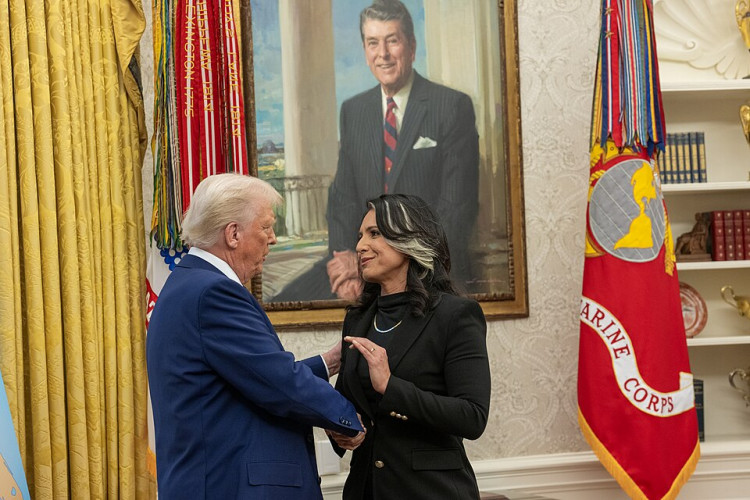
Fox News Digital first reported that Gabbard informed Trump of her decision during an Oval Office meeting Friday morning. Shortly afterward, Gabbard released a resignation letter on X, saying her husband, filmmaker Abraham Williams, had recently been diagnosed with a rare bone cancer.
"I cannot in good conscience ask him to face this fight alone while I continue in this demanding and time-consuming post," Gabbard wrote.
Trump publicly praised Gabbard following the announcement and accepted her explanation for leaving. Posting on Truth Social, he said she had done "a great job," adding that "she, rightfully, wants to be with him, bringing him back to good health as they currently fight a tough battle together."
The White House said Principal Deputy Director of National Intelligence Aaron Lukas, a former CIA officer and National Security Council analyst, will serve as acting director after Gabbard departs on June 30.
Behind the official statements, however, reports quickly emerged suggesting Gabbard's relationship with Trump and senior West Wing officials had deteriorated for months.
Reuters, citing a source familiar with the matter, reported that Gabbard "was pushed out by the White House," adding that "the White House has been unhappy with her for quite some time." Reuters also previously reported that Trump had privately discussed replacing her during a possible cabinet reshuffle earlier this year.
One of the most visible tensions reportedly centered on Iran policy. Trump had publicly suggested Gabbard was "softer" than he was regarding Tehran's nuclear ambitions, exposing a policy divide inside an administration that has increasingly adopted a more aggressive posture toward Iran.
Her internal initiatives also generated friction.
Officials reportedly grew frustrated with Gabbard's Director's Initiatives Group, which pursued politically sensitive reviews involving:
- The assassination of John F. Kennedy
- U.S. election security systems
- COVID-19 origins investigations
- Intelligence-community politicization claims
Another controversy erupted last year after Gabbard revoked security clearances for 37 current and former officials, a move critics argued exposed the identity of an undercover intelligence officer overseas.
Her tenure was contentious from the beginning. While Gabbard served in Iraq with the Hawaii National Guard and later became a lieutenant colonel in the Army Reserve, critics questioned her lack of direct intelligence experience. Democrats also repeatedly attacked her past positions on Russia, NATO and Syria, particularly her 2017 meeting with Syrian President Bashar al-Assad.
Inside the administration, signs of isolation reportedly intensified over time. According to several reports, Gabbard was excluded from key national security discussions involving Iran, Cuba and Venezuela, including deliberations tied to U.S. operations against Venezuelan leader Nicolás Maduro.
Senator Mark Warner, the top Democrat on the Senate Intelligence Committee and one of Gabbard's harshest critics, reacted swiftly Friday, arguing the role had become "too politicized."
Warner said the next intelligence chief "now more than ever needs to be an independent, experienced intelligence professional," adding that the position should focus on foreign intelligence "not involving himself or herself in domestic election incident."