California regulators have opened a review into TikTok following claims that the platform suppressed videos critical of President Donald Trump, escalating political and legal scrutiny of the social media app just weeks after its U.S. ownership structure was overhauled. The inquiry places TikTok, ByteDance, President Trump, and California Gov. Gavin Newsom at the center of a debate over algorithmic transparency, political speech, and platform accountability.
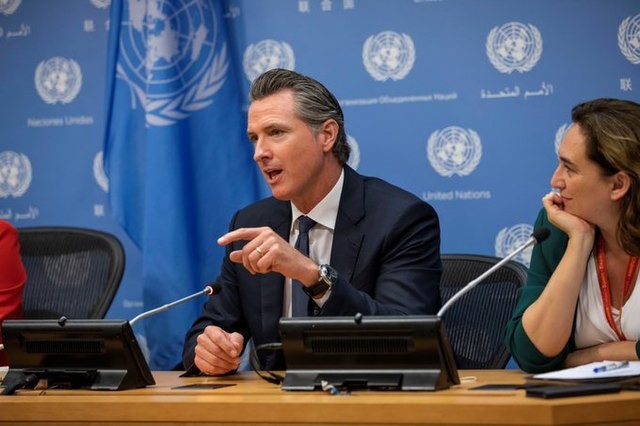
On Monday, Newsom's office said it had "received reports, and independently confirmed instances, of suppressed content critical of President Trump," according to a statement posted on X. The governor's office added that "Gavin Newsom is launching a review of this conduct and is calling on the California Department of Justice to determine whether it violates California law."
The announcement followed a wave of complaints from TikTok creators who said videos critical of Trump abruptly lost reach or stalled after posting. Some users attributed the issue to censorship, while others pointed to technical problems reported across the platform.
A spokesperson for TikTok's newly formed U.S. partnership rejected claims of deliberate suppression, saying, "It would be inaccurate to report that this is anything but the technical issues we've transparently confirmed." The spokesperson linked the disruption to a power failure at a U.S. data center, explaining that "the outage caused a cascading systems failure," even though "the network has been recovered."
TikTok told the BBC that "We've made significant progress in recovering our US infrastructure with our US data centre partner," while cautioning that some users could still experience "technical issues, including when posting new content." The company said engineers were continuing to work toward full restoration.
The scrutiny has extended beyond anonymous creators. Georgetown University law professor Steve Vladeck said a video he posted discussing reports of federal immigration agents potentially entering homes without warrants was flagged as being "under review." The video examined whether officers could bypass judicial approval under expanded enforcement authorities.
Questions have also emerged over claims that TikTok restricted the use of the name Epstein. The company denied blocking references to Jeffrey Epstein in private messages, as the Trump administration faces renewed attention over its handling of the Epstein files and related investigations.
Skepticism about TikTok's operations has persisted despite its recent restructuring. Casey Fiesler, a University of Colorado professor specializing in technology ethics and internet law, told CNN that a "significant lack of trust" surrounding TikTok's new ownership was predictable. She said she personally encountered difficulties posting videos referencing recent immigration enforcement actions in Minneapolis.
The controversy comes as ByteDance seeks to secure TikTok's future in the United States. The company recently confirmed that TikTok USDS Joint Venture LLC will control U.S. user data and algorithms, a move praised by President Trump, who has more than 16 million followers on the platform and has credited the app with helping his 2024 election victory.
Under the deal, ByteDance retains a 19.9% stake, while a consortium of U.S. and global investors holds 80.1%. Oracle, Silver Lake, and MGX each control 15%, and a White House official said the arrangement has received formal approval from both the U.S. and Chinese governments.