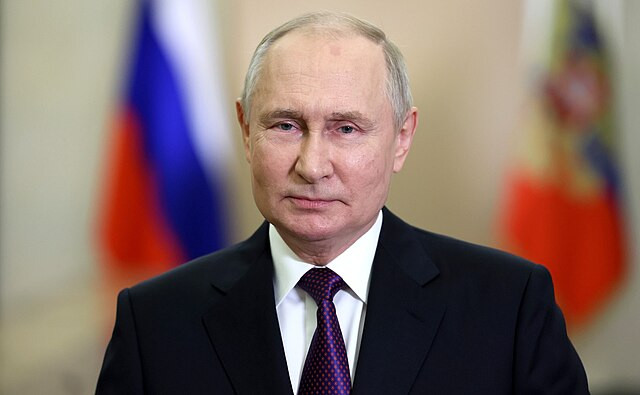
Freshly released records from the U.S. Department of Justice have intensified scrutiny of the late financier Jeffrey Epstein, unveiling communications that suggest repeated contact with Vladimir Putin and a wider web of international influence. The disclosure-made public on Jan. 30 under the Epstein Files Transparency Act-spans more than three million pages and includes hundreds of thousands of images and videos, reopening questions about Epstein's role far beyond the United States.
Being named in the materials does not imply wrongdoing, but the patterns documented in emails and drafts have prompted former officials and intelligence analysts to revisit long-running suspicions about blackmail, influence operations and access to political elites. The files describe Epstein as a broker who cultivated relationships across governments, business and security services, even after his 2008 conviction.
Several emails in the cache reference direct access to the Kremlin. In a 2011 message from an anonymous sender to Epstein, the writer said: "Spoke with Igor. He said last time you were in Palm Beach, you told him you had an appointment with Putin on Sept 16 and that he could go ahead and book his ticket to Russia to arrive a few days before you." The email suggests planning around a Russia trip and coordination with associates.
A separate 2014 exchange with Japanese entrepreneur Joi Ito points to similar efforts. Ito wrote: "Hey Jeffrey, I wasn't able to convince Reid to change his schedule to go meet Putin with you." The "Reid" referenced is Reid Hoffman, according to the documents.
Epstein also discussed leveraging Kremlin access with other high-profile figures. In a 2013 email to Ehud Barak, Epstein wrote: "Putin will re do his staff in the summer, bringing only very trusted people closer... more info on phone or face to face." The correspondence continued years after Epstein's criminal case, underscoring his persistence in maintaining elite contacts.
The files further suggest Epstein positioned himself as an intermediary around U.S.-Russia diplomacy. Records indicate he floated intelligence ahead of a 2018 summit to Thorbjørn Jagland, proposing engagement with Russian Foreign Minister Sergei Lavrov. Jagland responded that he would pass the message to Lavrov's assistant, according to the materials.
Former security officials quoted in contemporaneous reporting characterize the alleged operation starkly. "It's the world's largest honeytrap operation," one source said, describing a system that placed powerful figures "in compromising positions on an island bristling with technology." The phrase has since become shorthand among analysts reviewing the release.
The documents also revisit the influence of Robert Maxwell, whose daughter Ghislaine Maxwell was later convicted for her role in Epstein's crimes. Intelligence sources cited in the records allege Epstein was introduced to espionage tradecraft through Maxwell and cultivated Russian-linked networks, including figures such as Masha Drokova, described in an FBI report as praising Epstein.
Epstein died in 2019 while awaiting trial on federal sex-trafficking charges. While the newly released files stop short of proving criminal conduct by those named, they provide an unusually detailed map of relationships and claims that investigators and lawmakers are now reassessing amid renewed calls for transparency.