A partial U.S. government shutdown began at midnight Friday after Congress failed to clear a $1.2 trillion funding package, triggering fresh political brinkmanship in Washington and drawing a pointed warning from President Donald Trump toward Democrats as negotiations stalled in the House.
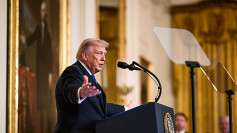
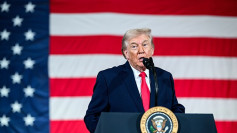
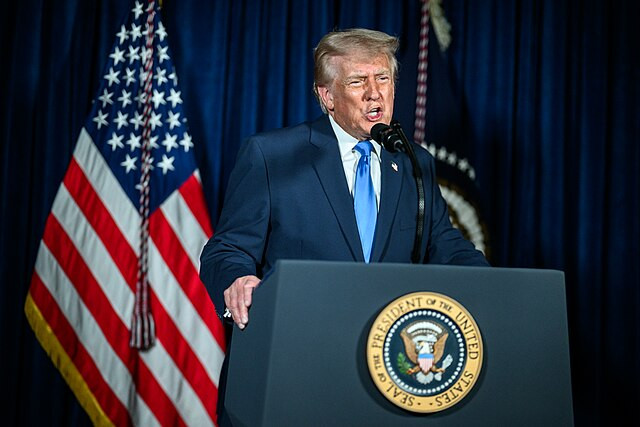
Speaking Saturday to Fox News correspondent Jacqui Heinrich, Trump struck a restrained but unmistakably accusatory tone. "I think it's going fine... Hopefully enough people will use their heads," the president said, while placing responsibility for the shutdown squarely on the opposition. "I think the Democrats don't want it to happen. Makes them look very bad, but it's not a good thing for the country."
The shutdown followed Senate passage of a stopgap funding framework that bundles five appropriations bills with a two-week continuing resolution for the Department of Homeland Security. The Senate action, however, came too late to prevent funding lapses, and the House is not scheduled to resume legislative business until Monday.
House Speaker Mike Johnson said he expects the measure to advance through the Rules Committee at 4 p.m. Monday, with floor votes potentially beginning Tuesday. "We'll get this done by Tuesday, I'm convinced," Johnson said Sunday on Fox News, arguing that the package balances urgency with space for further debate over DHS.
Democrats, led by House Minority Leader Hakeem Jeffries, have refused to allow expedited passage under suspension of the rules, which would require a two-thirds majority. "They cannot simply move forward with legislation, taking a my way or the highway approach," Jeffries said on MSNBC's PoliticsNation. He added that Democrats would evaluate the bill "on its merits" after caucus discussions scheduled for Monday.
The Democratic stance is tied largely to Homeland Security funding, which has become a flashpoint following recent immigration enforcement actions. Jeffries said the two-week DHS extension creates room for reforms, declaring, "There's a robust, ironclad path to bringing about the type of change the American people are demanding." Democrats have cited proposals including body cameras for agents, warrant standards and limits on certain enforcement practices.
Republicans, holding a narrow 219-215 House majority after a recent Texas special election, can afford only one defection. That margin has heightened the influence of conservative holdouts such as Rep. Anna Paulina Luna, who has demanded that proof-of-citizenship legislation be attached to any funding deal. "If Schumer shuts the government down, the price to reopen will be the SAVE Act," Luna wrote on X.
The immediate effects of the shutdown remain limited, with contingency plans keeping core functions at the Pentagon, Treasury and Homeland Security running. Still, roughly 800,000 federal workers could face furloughs if the impasse drags on, while national parks close, passport processing slows and veterans' services face disruptions. Economists warn that a prolonged shutdown could shave billions from gross domestic product.
Trump, recalling earlier shutdowns during his presidency, said last year's funding lapse "cost us about 1.5 GDP points," arguing that prolonged closures weaken the economy and national security alike. For now, attention is fixed on the House, where leadership must navigate internal divisions and Democratic resistance as the shutdown clock continues to tick.