A newly scrutinized FBI presentation compiled during the federal investigation into Jeffrey Epstein has reignited public attention by listing 11 "prominent" individuals whose names surfaced during investigative work, according to reporting reviewed by The New York Times. The document, a working slide deck summarizing allegations and leads, includes references to Donald Trump, Prince Andrew, Bill Clinton and William Barr, among others, underscoring the gap between being named in investigative material and being charged with wrongdoing.
The presentation, never intended as a public-facing verdict, aggregates tips, interviews and unverified claims gathered by agents. The Times reported that inclusion reflects the scope of inquiry rather than conclusions, a distinction that has proven difficult to maintain as excerpts circulate online stripped of context.
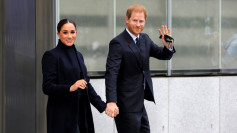
For Prince Andrew, the reemergence of documents has revived a familiar pattern of renewed scrutiny without new courtroom findings. ITV News reported that many of the claims referenced in the files remain unverified. In January 2022, Buckingham Palace announced that Andrew's military affiliations and royal patronages were returned to Queen Elizabeth II and that he would no longer use "His Royal Highness" in an official capacity. Andrew has repeatedly denied wrongdoing related to Epstein.
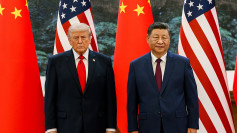
Trump responded forcefully to the renewed attention. Writing on Truth Social, he said: "Not only wasn't I friendly with Jeffrey Epstein but, based upon information that has just been released by the Department of Justice, Epstein and a sleazebag lying 'author' named Michael Wolff, conspired in order to damage me and/or my presidency." He added: "Additionally, unlike so many people that like to 'talk' trash, I never went to the infested Epstein island but, almost all of these crooked Democrats, and their donors, did."
The political reaction has unfolded alongside the release of a vast archive. U.S. Department of Justice disclosed roughly three million records tied to Epstein's investigations, according to Anadolu Agency. Trump's name appears more than 3,000 times across the materials, a figure that draws attention but offers no inherent explanation, as names can appear as contacts, references, witness threads or uncorroborated allegations.
The FBI presentation itself, as described by The New York Times, is emblematic of how investigative work operates: incomplete, iterative and built to guide next steps rather than adjudicate guilt. The paper noted that there is no automatic leap from appearance in such material to formal suspicion or prosecution.
What has unsettled observers is the speed with which a bureaucratic artifact has become a cultural proxy for judgment. The slide deck compresses years of inquiry into a digestible list, inviting readers to infer meaning where none is supplied. Legal experts caution that this dynamic risks converting transparency into spectacle.