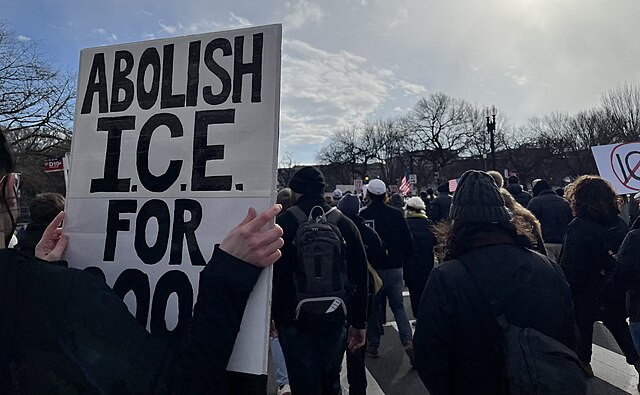
A federal watchdog found that some women and transgender people held in U.S. immigration detention were given as few as 12 pads per month, forcing detainees to improvise with toilet paper, rags and mattress filling to manage menstruation. The findings, released by the Government Accountability Office, raise questions about health, dignity and oversight inside facilities run or contracted by Immigration and Customs Enforcement.
The investigation, requested by members of Congress, compared practices at ICE facilities with those of the Bureau of Prisons and found inconsistent rules and enforcement. GAO investigators reported that detainees described bleeding through clothes and stacking multiple low-quality pads at once to avoid leaks.
By contrast, federal prisons are bound by the First Step Act, which requires free menstrual products in sufficient quantities and mandates that they be accessible at all times. ICE facilities, however, operate under three different detention standards that vary in specificity, leaving product access uneven and difficult to verify.
GAO site visits to five BOP institutions and three ICE facilities, along with surveys of officials across 29 BOP and 52 ICE locations, revealed that oversight mechanisms often failed to detect noncompliance. In some prisons, inspectors did not systematically check replenishment timelines, which policy requires within 24 hours. In ICE settings, the lack of precise standards meant inspectors could not reliably confirm equitable access.
ICE told the GAO that its standards were intended for "flexibility," a rationale the report said limited accountability. Without clear requirements, the watchdog concluded, inspectors cannot ensure that menstrual products are available in common areas or delivered promptly to those who need them.
Members of Congress framed the findings as a basic rights issue. Rep. Grace Meng, who requested the investigation, said: "Menstrual products aren't a luxury, they are a basic need for half of the population." Her office pointed to accounts of detainees forced to remain in blood-soaked clothing as evidence of the human cost of vague standards.
Advocates say the health risks extend beyond discomfort. Miriam Vishniac, founder of the Prison Flow Project, warned that improvised solutions can lead to infection and abuse. "When you do not document these procedures, menstruators in confinement are left at the mercy of their captors," she said.
The GAO noted that some detainees reported receiving 12 to 20 pads or tampons per month, far below typical needs of three to six products per day during a seven-day cycle. Others said products were unavailable in common areas, forcing them to ask guards repeatedly for supplies.
The watchdog recommended that the Bureau of Prisons strengthen oversight and compliance checks and urged ICE to clarify its requirements for menstrual care. BOP agreed to implement the recommendations. ICE declined, maintaining that operational flexibility was necessary, a stance the GAO warned would likely perpetuate uneven access to basic care.