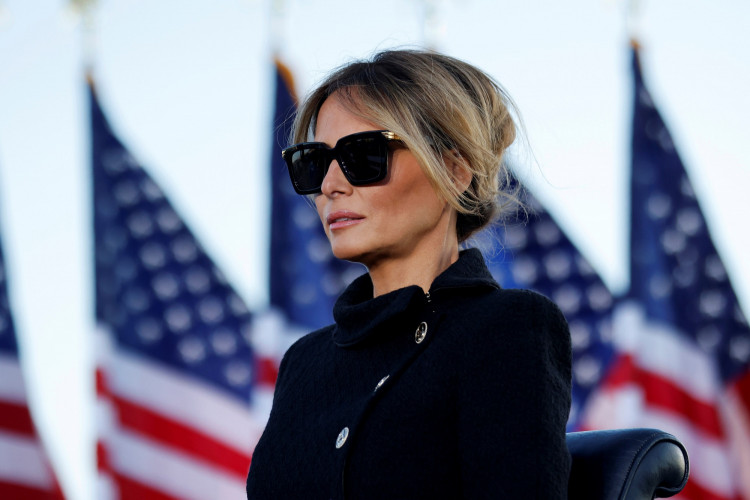
Melania Trump stepped off Air Force One at Joint Base Andrews near 11 p.m., wearing oversized black sunglasses despite the darkness, prompting a wave of online criticism just as Amazon's $40 million documentary about the First Lady begins streaming.
The late-night arrival in Washington placed President Donald Trump and the First Lady under floodlights on a cold, wind-swept tarmac. While the president descended barefaced, Melania Trump appeared in a tailored coat and large dark glasses that obscured much of her face-an accessory choice that quickly became the focal point of social media commentary.
Clips circulated rapidly on X, where critics questioned the optics of sunglasses at night. "And the dark glasses at night are for what?" one user wrote. Another asked, "Maybe she should take her sunglasses off, like wtf????" Others labeled the look "Outrageous" and "Ridiculous," turning the brief airport moment into a trending topic.
For detractors, the eyewear reinforced a long-running narrative that the First Lady maintains deliberate emotional distance from the public. In that reading, the sunglasses function less as fashion than as a visual metaphor-an additional layer between Melania Trump and the cameras that routinely track her movements.
The episode arrives at a sensitive moment in her public image management. Amazon has reportedly paid $40 million for Melania, a self-titled documentary chronicling the 20 days leading up to the 2025 inauguration. Competing platforms, including Netflix and Disney, were said to have been outbid.
According to promotional material and reporting around the film, the documentary provides behind-the-scenes access, including fittings with designer Adam Lippes and scenes of White House preparations. It also features commentary from Melania Trump about her son, Barron Trump, now 19 and attending New York University.
In the film, she describes Barron as having an "incredible mind" and being "very confident," portraying a protective and engaged mother. The documentary reportedly includes private moments, including car conversations between Melania and Donald Trump discussing their son's ideas about digital outreach and media strategy.
The contrast between the documentary's curated intimacy and the public spectacle of the midnight arrival has amplified commentary online. The sunglasses, critics argue, undercut the film's premise of greater accessibility. Supporters counter that her fashion choices have long been intentional and self-directed.
Melania Trump's wardrobe has previously drawn controversy, most notably when she wore a jacket bearing the phrase "I really don't care, do u?" during a visit to a migrant detention center. Observers have often interpreted her clothing as signaling autonomy or defiance within a highly scripted political environment.
The current backlash highlights the tension between political branding and personal privacy for high-profile figures. The First Lady's public role traditionally invites expectations of warmth and visibility. Her consistent preference for controlled, limited engagement-now juxtaposed with a multimillion-dollar effort to humanize her image-underscores how even minor visual details can carry outsized political symbolism in an era of instantaneous reaction.