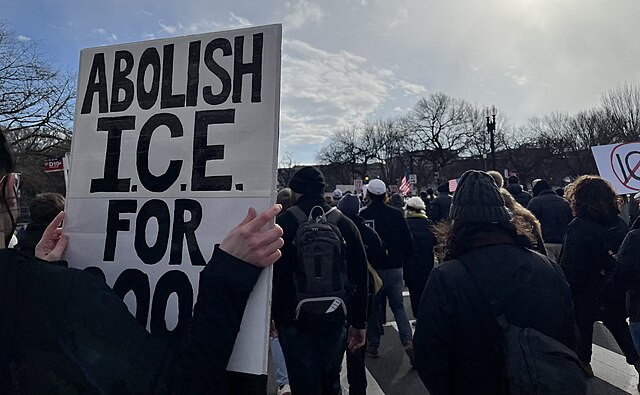
A federal court filing in Minnesota alleges that U.S. Immigration and Customs Enforcement agents used excessive force against a detainee in St. Paul, resulting in skull fractures and internal bleeding, and then restrained him while he received hospital treatment-claims that have intensified scrutiny of ICE's conduct and detention practices.
The case, now before a federal court in Minnesota, stems from a Jan. 8 arrest of a Mexican-born man in St. Paul. According to a habeas corpus petition filed by his attorneys, the man was transported to a hospital roughly four hours after his arrest. A CT scan allegedly showed bilateral skull fractures and significant hemorrhaging.
The petition states that medical staff informed attorneys that the detainee had been "dragged and mistreated" by federal agents. ICE agents reportedly told hospital personnel that the man, while handcuffed on the ground, had "purposely ran headfirst into a brick wall." Another agent allegedly remarked that the man "got his shit rocked," according to the filing.
The detainee's lawyers contend that the injuries are inconsistent with the explanation provided and have requested either his immediate release or an order compelling the federal government to justify the legality of his detention. They also asked the court to block any transfer to another state while proceedings are pending.
The man entered the United States legally in 2022, according to his attorneys, and was facing civil immigration enforcement for overstaying his visa. His only criminal matter, they said, was a minor charge for driving without a valid license. They argue there was no basis for heightened force and suggest he was targeted simply because he is "a Spanish-speaking Latino."
Assistant United States Attorney Anna H. Voss responded that the detainee was lawfully held under federal immigration statutes due to his visa overstay. The government's position, as outlined in court filings, is that once discharged from medical care he would be returned to ICE custody for removal processing. Courts in Minnesota have historically rejected similar habeas petitions challenging immigration detention tied to visa violations.
The petition further alleges that ICE agents remained stationed at the detainee's bedside and restrained him with leg shackles, limiting his ability to move while hospitalized. Legal observers say such claims raise broader constitutional questions about due process and proportionality of force in civil immigration enforcement.
Human rights advocates have called for independent oversight and a transparent investigation. Critics argue that immigration detention, which is civil rather than criminal in nature, should not mirror punitive custody conditions. The presence of agents in hospital rooms and the continued use of restraints on a severely injured detainee have drawn particular concern from legal and medical professionals.