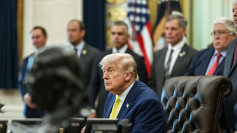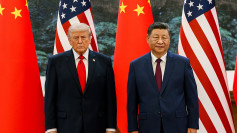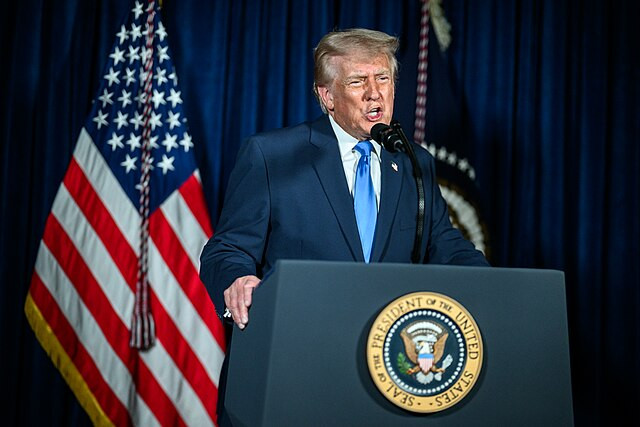
President Donald Trump's decision to exclude Colorado Governor Jared Polis and Maryland Governor Wes Moore from a formal White House dinner during the National Governors Association's winter meeting has prompted a boycott warning from Democratic governors and deepened partisan tensions at what is typically a bipartisan policy gathering in Washington.
According to reporting by The Hill, the White House initially invited only Republican governors to meet with Trump on Friday before later extending invitations to Democratic governors. However, Polis and Moore remained excluded from a black-tie dinner scheduled for Saturday, making them the only two Democratic governors not invited, The Hill reported.
The exclusion quickly triggered pushback. Kentucky Governor Andy Beshear, chair of the Democratic Governors Association, led 18 Democratic governors in warning they would skip any White House event during the NGA weekend-including the dinner-if all governors were not invited. Beshear later characterized the dispute as "a lot of drama" and "unnecessary," and told CNN's State of the Union that the weekend "no longer looks like it's going to be productive at all" and: "At this point, I'm not going."
The confrontation has injected national political friction into a meeting usually centered on pragmatic concerns such as disaster response coordination, federal funding and cross-state collaboration. The NGA conference, which runs from Thursday through Saturday, includes sessions on education, energy, economic growth and artificial intelligence-topics that typically draw governors from both parties regardless of ideological divides.
Jared Leopold, a former communications director at the Democratic Governors Association, told The Hill that the White House's move represented "a massive departure from precedent." Governors, he said, would have to decide whether attending White House events under those circumstances would be productive.
Polis indicated he would attend the NGA conference itself, describing it as "an important resource," according to The Hill, though he did not clarify whether he would participate in the White House session. Moore, speaking to CBS News, signaled conditional openness to engagement but drew a line around tone. "If the point of the meeting ... is to turn it into name-calling ... then my answer to the president is very clear: nah I'm good," he said.
Democratic governors have split over how to respond:
- Connecticut Governor Ned Lamont and Maine Governor Janet Mills planned to attend the White House meeting but not the dinner, The Hill reported.
- Hawaii Governor Josh Green and Washington Governor Bob Ferguson intended to skip the weekend altogether, with Ferguson's office saying he had decided "quite some time ago."
- California Governor Gavin Newsom said he would not attend the conference, according to The Hill.
The dispute also highlighted the role of Oklahoma Governor Kevin Stitt, the Republican NGA chair. The Hill reported that Stitt warned he would cancel the White House meeting if Democratic governors were not included. Democrats were later invited to the broader session, though the dinner exclusion remained.
Political scientist Thad Kousser of the University of California, San Diego, told The Hill that while NGA winter meetings rarely produce sweeping policy breakthroughs, they serve a critical function in building working relationships across party lines. He described how governors develop familiarity and trust that can prove essential when crises such as hurricanes require rapid interstate coordination.