President Donald Trump used the longest State of the Union address in modern history to defend his tariff strategy, confront Democrats over immigration and signal new trade actions despite a recent Supreme Court ruling curbing part of his import-tax authority.
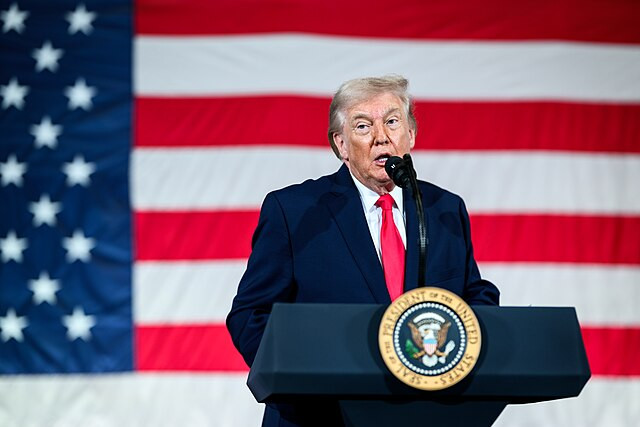
Speaking before a joint session of Congress on Feb. 24, Trump opened by invoking the nation's approaching 250th anniversary and declaring the beginning of a "golden age of America." "Tonight, after just one year, I can say with dignity and pride that we achieved a transformation like no one has ever seen before," he told lawmakers.
The address stretched more than one hour and 45 minutes, surpassing previous records for length. It arrived at a politically delicate moment: recent polling has shown slipping approval ratings, and historical trends suggest presidents often face midterm losses in Congress.
Trade policy dominated the speech. Trump defended sweeping tariffs imposed during his first year back in office, even after the Supreme Court ruled that part of the administration's use of emergency authority to levy import taxes was unconstitutional.
He reiterated plans to pursue replacement tariffs under alternative statutory authorities. "As time goes by, the tariffs paid for by foreign countries will substantially replace the modern-day system of income tax," he said.
Economists have disputed that assertion, noting that import duties are typically borne by U.S. businesses and consumers. Surveys in recent months indicate many Americans blame tariffs for higher costs.
Beyond trade, Trump outlined domestic initiatives that would require congressional approval, including:
- Federal matching of up to $1,000 annually for retirement accounts for workers without employer-sponsored plans
- "Ratepayer protection pledges" requiring technology companies building energy-intensive data centers to absorb additional electricity costs
- Continued implementation of tax cuts passed under the "One Big Beautiful Bill Act"
Immigration produced one of the evening's most visible partisan confrontations. The president highlighted relatives of crime victims involving individuals in the country illegally and asked attendees to stand if they believed "the first duty of the American government is to protect American citizens, not illegal aliens." Many Democrats remained seated, prompting a pointed rebuke from the president.
Foreign policy remarks closed the speech. Trump welcomed the release of Israeli hostages by Hamas and addressed tensions with Iran, referencing last year's U.S. strike on Iranian nuclear facilities. "My preference is to solve this problem through diplomacy, but I will never allow the world's number one sponsor of terror to obtain a nuclear weapon," he said.
Virginia Gov. Abigail Spanberger delivered the Democratic rebuttal, focusing on cost-of-living pressures and criticizing tariff and tax policies. She raised concerns about affordability and federal workforce reductions, framing economic strain as central to voter anxieties.
The speech combined celebratory rhetoric about first-year achievements with combative exchanges that underscored the country's deep partisan divisions. Republican lawmakers frequently applauded, while Democratic members displayed visible dissent throughout.