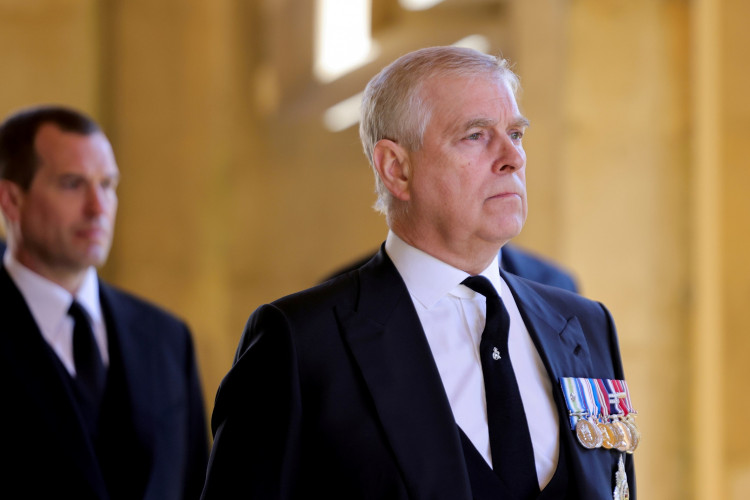
Members of the House of Commons voted Tuesday to compel the release of official files detailing Andrew Mountbatten-Windsor's decade-long tenure as the United Kingdom's Special Representative for International Trade and Investment, escalating political scrutiny over his conduct during the Epstein era.
The decision followed a charged debate in Westminster in which lawmakers from multiple parties pressed for transparency. Although attendance from both the ruling Labour Party and opposition Conservatives was reportedly thin, the motion passed, authorizing the Prime Minister's office to make the documents public.
The vote comes as questions intensify about whether confidential trade materials were shared with Jeffrey Epstein during Andrew's time as envoy between 2001 and 2011. U.S. government-released emails indicated that Andrew had forwarded travel reports from official visits in 2010, including references to Vietnam and Singapore, to Epstein-raising concerns about potential breaches of confidentiality rules governing trade representatives.
Trade minister Chris Bryant, who previously served in the trade ministry, delivered some of the sharpest criticism during the Commons debate. He described Andrew's tenure as "a constant self-aggrandising, self-enriching hustle." Bryant further characterized him as "a rude, arrogant and entitled man who could not distinguish between the public interest which he said he served, and his own private interest."
Andrew's envoy role was unpaid but provided extensive international access to senior business and government figures. The position, critics argue, blurred the lines between ceremonial royal duties and substantive commercial diplomacy.
Opposition MPs framed the vote as a constitutional moment. Brendan O'Hara of the Scottish National Party declared during the debate: "These arcane rules make a mockery of our democracy. Nobody, regardless of rank or privilege, should or must be above the law."
The Speaker of the House had already authorized discussion of Andrew's record, citing the fact that he has been stripped of his royal titles and therefore no longer benefits from traditional parliamentary restraint surrounding senior royals.
The Liberal Democrats invoked a "humble address," an antiquated parliamentary mechanism used to require the government to produce documents. The government agreed to comply and pledged to release the files "as soon as possible," while emphasizing that disclosures must not interfere with ongoing police investigations.
Key elements expected in the document release include:
- Travel reports from Andrew's overseas missions between 2001 and 2011
- Internal correspondence regarding his trade envoy activities
- Communications potentially referencing Jeffrey Epstein
The move may also place former ministers under renewed scrutiny, including officials who served during Tony Blair's administration when Andrew's role was formalized and expanded.
The broader political context includes the publication of more than three million pages of U.S. records connected to Epstein, which have reignited public debate over royal accountability. In that climate, the Commons vote signals a willingness to pierce longstanding conventions shielding the monarchy from parliamentary examination when state functions intersect with private associations.