A drone strike at Shuaiba port in Kuwait that killed six American service members has triggered scrutiny inside the U.S. military over the design and protection of a facility Pentagon officials had described as a "fortified tactical operations" center.
The attack, attributed to Iranian forces amid the widening conflict tied to Operation Epic Fury, struck a building used by U.S. personnel operating from the strategic port installation. U.S. Central Command confirmed the deaths earlier this week and said at least 18 additional service members were seriously wounded.
The Pentagon has publicly identified four of the six troops killed. The names of the remaining two are being withheld until their families are notified.
In the days since the strike, multiple U.S. military officials have raised questions about the structure that housed the personnel. According to three officials with direct knowledge of the attack who spoke to CBS News, the operations center was essentially a triple-wide trailer converted into office space.
Such structures are commonly used at overseas bases, officials said, but they are not typically designed to withstand an overhead drone strike. The building's principal protection consisted of T-walls-steel-reinforced concrete barriers roughly six to twelve feet high-intended to shield against blasts and shrapnel from ground-level attacks.
Officials said those barriers offer little protection against munitions delivered from above. Two of the officials indicated that the Iranian drone appeared to strike directly on top of the structure, igniting a fire that quickly engulfed the building and complicated rescue and recovery operations.
Preliminary battle-damage assessments suggest the attack was carried out by a one-way drone similar to Iran's Shahed-136 "kamikaze" systems, which have been used in previous regional conflicts.
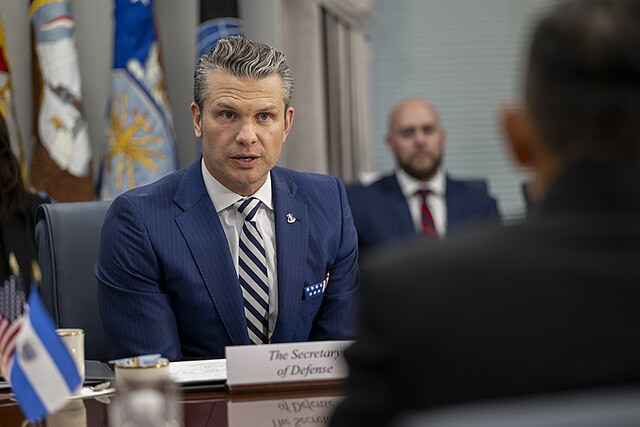
The Pentagon has defended the description of the site as fortified. Defense Secretary Pete Hegseth addressed the strike during a press briefing, emphasizing the difficulty of defending against saturation attacks.
"You have air defences, and a lot's coming in, and you hit most of it," Hegseth said. "Every once in a while, you might have one, unfortunately, we call it a squirter, that makes its way through. And in that particular case, it happened to hit a tactical operations centre that was fortified, but these are powerful weapons."
Pentagon spokesperson Sean Parnell also rejected criticism that the building was an improvised structure. Writing on X, Parnell said: "A Tactical Operations Center is not a 'makeshift office space.'" He added that the facility was "fortified with 6-foot walls" and that "Every possible measure has been taken to safeguard our troops - at every level."
Several unresolved questions remain under review, according to officials familiar with the incident. Among them:
- Whether additional drone-defense systems were deployed at Shuaiba port
- Whether warning sirens activated before the strike
- Whether troop concentration inside the building increased vulnerability
Two officials said they were unaware of any American counter-rocket, artillery, and mortar system at the port capable of intercepting drones. Kuwaiti interceptors were reportedly operating in the region, though it remains unclear whether they engaged the incoming aircraft.
Some personnel also reported that warning alarms were not heard before the strike, although sirens had been activated earlier in the week during other drone incidents.
Operation Epic Fury, the broader U.S.-led campaign targeting Iranian-linked military infrastructure, continues across the region as coalition forces remain on heightened alert following the attack.
Defense officials said the casualties represent the first confirmed American military deaths since the current phase of the conflict with Iran escalated. Hegseth described the fallen service members as "the absolute best of America."
One U.S. official reflecting on the loss said: "I'm sorry for their families' losses. They were nice people doing what their nation asked of them."