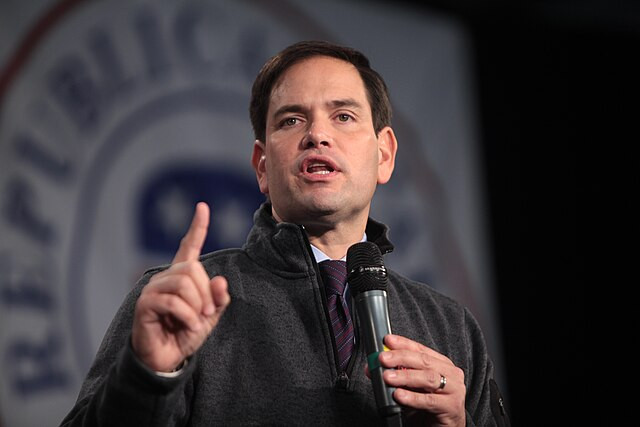
U.S. Secretary of State Marco Rubio is facing mounting scrutiny from lawmakers after remarks about the U.S. strike on Iran suggested that Israeli military planning played a decisive role in Washington's decision to launch its own attack, fueling debate in Congress about the origins and strategy behind the conflict.
The controversy erupted after a clip of Rubio's comments circulated widely online, showing the secretary explaining that the United States moved preemptively because Israel appeared poised to strike Iran, an action that would likely trigger retaliation against American forces stationed in the region.
Speaking to reporters ahead of a briefing with congressional leaders, Rubio said intelligence assessments indicated that Iranian retaliation against U.S. assets would be unavoidable if Israel attacked first.
"There absolutely was an imminent threat," Rubio said. "And the imminent threat was that we knew that if Iran was attacked, and we believed they would be attacked, they would immediately come after us, and we were not going to sit there and absorb a blow before we respond."
Rubio's explanation introduced a more complex rationale for the U.S. military operation than the one publicly emphasized by the White House. Critics said his remarks appeared to imply that Washington acted partly because Israel's anticipated actions would draw the United States into the conflict regardless.
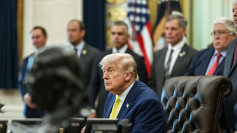
President Donald Trump has framed the military action differently. Addressing reporters on Tuesday, Trump said the strike was intended to neutralize broader threats posed by Tehran.
"They were getting ready to attack Israel. They were gonna attack others," Trump said, describing the operation as a preventive step against Iranian aggression.
The divergent explanations have prompted questions on Capitol Hill about the strategic calculus behind the administration's decision to launch military operations against Iran.
Some lawmakers said Rubio's comments suggested the United States might have entered the conflict partly in response to Israeli plans rather than an immediate threat directed at U.S. territory.
Independent Sen. Angus King described that possibility as troubling, telling reporters the implication was "very disturbing," and warning that past administrations had traditionally resisted entering conflicts primarily to advance the interests of another nation.
At the same time, several Republican lawmakers defended the president's decision. Sen. Markwayne Mullin, an Oklahoma Republican, praised the operation and said Trump "did the world a favour" by targeting Iranian capabilities.
The debate reflects deeper questions about the long-standing strategic relationship between Washington and Jerusalem. Since 1948, the United States has provided Israel with more than $300 billion in military assistance, making the alliance one of the most significant security partnerships in modern geopolitics.
Analysts say that level of support gives Washington substantial influence but also creates political and strategic entanglements when conflicts involving Israel escalate.
Foreign policy experts also warned that Rubio's remarks could feed concerns that the United States risks becoming entangled in regional conflicts driven partly by the calculations of allied governments.
Kelly Grieco, a senior fellow at the Stimson Center, said the framing of events suggested a troubling dynamic. She told Al Jazeera that Rubio's remarks implied "the United States was entrapped by the Israelis."
Rubio, however, emphasized that American officials believed Iranian retaliation would occur regardless of who initiated the strike.
"It was abundantly clear that if Iran came under attack by anyone, the United States or Israel or anyone, they were going to respond," Rubio said. "The orders had been delegated down to the field commanders. It was automatic."
The secretary argued that the administration's objective was to prevent American casualties by acting before Iran launched attacks on U.S. bases and personnel in the region.
The political fallout from Rubio's comments is unfolding as Congress debates a potential war powers resolution aimed at limiting the president's authority to continue military operations in Iran without explicit legislative approval.