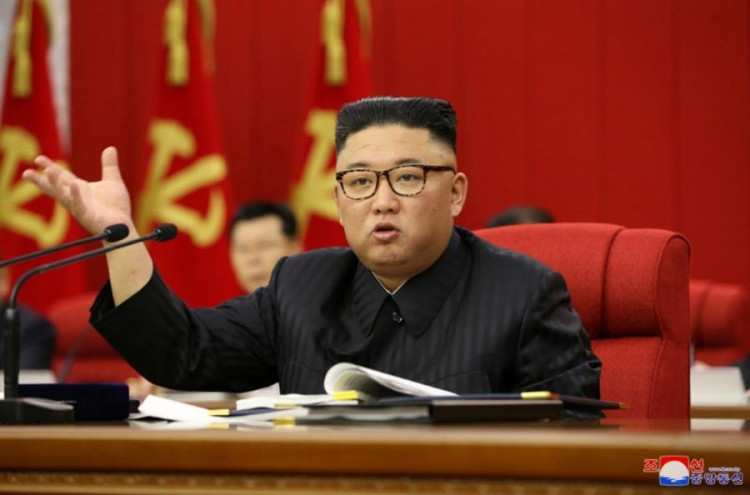
North Korea launched a volley of 12 nuclear-capable rocket systems during a military exercise overseen by leader Kim Jong Un, with his teenage daughter appearing beside him at the event, a display that both heightened regional security concerns and fueled renewed speculation about the regime's future succession plans.
According to reporting by The Independent citing state media accounts, the rocket launches occurred during a firepower drill designed to demonstrate the operational readiness of North Korea's missile forces as U.S.-South Korea joint military exercises continue nearby.
The rockets reportedly flew toward the Sea of Japan, where North Korean officials said the system demonstrated precise targeting capabilities during the drill.
State media portrayed the weapons system in dramatic terms, describing the rocket launcher platform as a "very deadly yet attractive weapon."
Coverage released by KCNA, North Korea's state news agency, showed Kim observing the launch sequence alongside his daughter while soldiers carried out coordinated preparations and firing procedures.
The appearance of Kim's daughter at such a prominent military event has drawn particular attention among analysts who study the leadership dynamics of the isolated state.
While Kim has occasionally appeared publicly with family members, the participation of his daughter in a high-profile military inspection has been interpreted by some experts as an effort to elevate her public role.
Analysts note that leadership succession in North Korea traditionally involves gradual exposure to military and political institutions, making the symbolism of the event significant.
North Korean media emphasized the technical performance of the weapons tested.
KCNA reported that Kim described the drill as intended to send a strategic message to adversaries in the region.
According to Reuters, citing KCNA, Kim said the exercise was designed to make "enemies within a 420 km (260 mile) striking range feel uneasiness."
He added that the demonstration would give them "a deep understanding of the destructive power of tactical nuclear weapons."
Security analysts say the statement likely referred to U.S. and South Korean forces stationed on the Korean Peninsula, which fall within the range described in the remark.
The weapons tested during the exercise appear to reflect North Korea's ongoing shift toward solid-fuel missile technology.
Military specialists say solid-fuel propulsion systems offer several advantages over older liquid-fuel designs, including faster launch readiness and improved mobility.
Key characteristics of the systems highlighted in the drill include:
- Solid-fuel propulsion, allowing rapid deployment
- Mobile launch platforms, making detection more difficult
- Precision targeting capability, according to state media claims
The ability to launch missiles quickly from mobile platforms complicates the defensive planning of neighboring states such as South Korea and Japan, which rely heavily on early detection systems.
Officials in Tokyo confirmed that the missiles launched during the drill did not land inside Japan's exclusive economic zone, though Japanese authorities said they were closely monitoring the activity.
The timing of the exercise also appears connected to ongoing joint military drills between the United States and South Korea, which North Korea routinely criticizes as provocative.
Pyongyang has historically used missile launches and military demonstrations to signal displeasure with allied exercises conducted by Washington and Seoul.