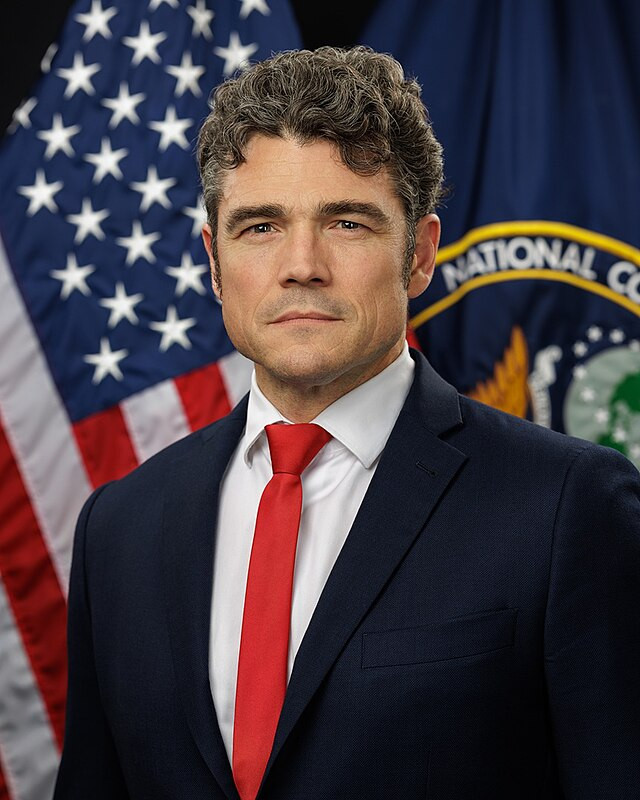
Joe Kent, director of the National Counterterrorism Center, resigned following the U.S.-Israel strike on Tehran, breaking publicly with Donald Trump's Iran policy and warning that "Iran posed no imminent threat to our nation," according to a resignation letter that underscores divisions within the administration's national security leadership.
Kent's departure comes days after the 28 February strike on Tehran, an operation U.S. officials described as targeting Iranian military capabilities but which has since triggered broader regional escalation and heightened domestic security concerns.
In a resignation letter posted to X, Kent wrote: "I cannot in good conscience support the ongoing war in Iran." He added, "Iran posed no imminent threat to our nation, and it is clear that we started this war due to pressure from Israel and its powerful American lobby."
The remarks mark one of the most direct internal criticisms of the administration's military decision-making since the conflict began, particularly from a senior official responsible for integrating counterterrorism intelligence across agencies.
Kent also invoked personal experience in explaining his opposition. "As a veteran who deployed to combat 11 times and as a Gold Star husband who lost my beloved wife Shannon in a war manufactured by Israel, I cannot support sending the next generation off to fight and die in a war that serves no benefit to the American people nor justifies the cost of American lives," he wrote.
Despite the criticism, Kent struck a conciliatory tone toward administration leadership, stating: "It has been an honor serving under @POTUS and @DNIGabbard and leading the professionals at NCTC. May God bless America."
The National Counterterrorism Center operates as a central node in the U.S. intelligence system, synthesizing data from across agencies to assess global terrorism threats. The resignation of its director during an active conflict signals potential fractures in how intelligence assessments are being interpreted or acted upon at senior policy levels.
Kent served as a principal adviser to Tulsi Gabbard on counterterrorism matters and oversaw intelligence integration tied to international terrorist threats. His exit removes a key figure at a moment when policymakers are weighing both overseas military risks and domestic security implications.
The Tehran strike has already produced measurable downstream effects, including warnings from federal law enforcement. The Federal Bureau of Investigation has alerted local authorities, particularly in California, to potential retaliatory threats, including possible drone-related plots.
Officials have not publicly detailed the intelligence underpinning those warnings, but the alerts reflect concern that escalation abroad could translate into asymmetric threats within the United States.
Kent's resignation also adds to scrutiny over the strategic rationale for the strike, particularly as questions persist over whether Iran posed an immediate threat justifying military action. His assertion that no imminent threat existed contrasts with the administration's framing of the operation as necessary to disrupt Iranian capabilities.
Before entering government, Kent served more than two decades in the U.S. Army, including 11 combat deployments with elite units such as the 75th Ranger Regiment and Army Special Forces. He received multiple military decorations, including six Bronze Stars.
His personal history is closely tied to U.S. counterterrorism operations. His first wife, Navy Senior Chief Petty Officer Shannon Kent, was killed in a 2019 suicide bombing in Syria, a loss he referenced directly in his resignation as shaping his stance on future military engagements.