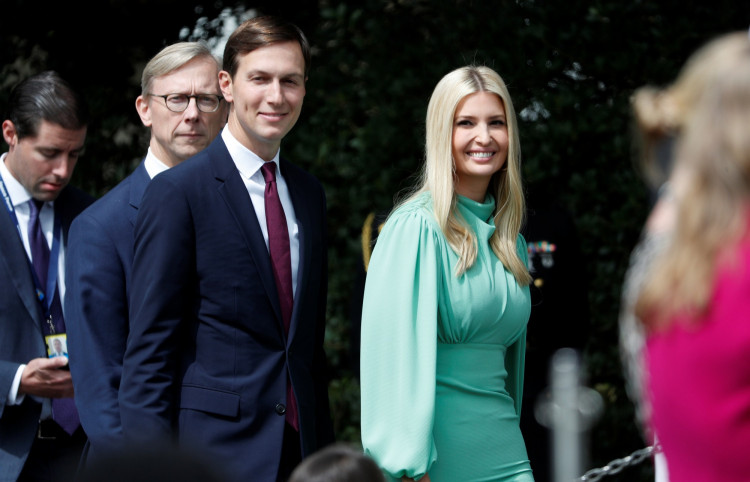
Jared Kushner is facing mounting scrutiny from lawmakers and ethics watchdogs as his role in Middle East diplomacy for Donald Trump intersects with efforts to raise billions of dollars for his private equity firm, prompting a formal congressional investigation and intensifying concerns about potential conflicts of interest.
Kushner, who was appointed to Trump's Board of Peace on Feb. 19, has been involved in high-level discussions ranging from Iran nuclear negotiations to Gaza ceasefire talks. At the same time, his firm, Affinity Partners, has expanded rapidly, managing £4.8 billion ($6.2 billion) in assets by the end of 2025.
The overlap between diplomacy and fundraising has drawn sharp criticism from Democrats. Senator Elizabeth Warren summarized the concern in a video posted to her Senate website: "Donald Trump named his son-in-law Jared Kushner 'Peace Envoy.' Now, in the middle of a war with Iran, our 'Peace Envoy' is in the Middle East trying to raise $5 billion for his private equity firm."
Affinity Partners' funding base is closely tied to Gulf sovereign wealth. Early backing included £1.56 billion ($2 billion) from Saudi Arabia's Public Investment Fund, followed by investments from Qatar and the United Arab Emirates. Lawmakers argue that the firm's rapid growth-rising from roughly £2.34 billion to £3.75 billion in foreign capital during 2024-coincided with Kushner's reemergence in U.S. foreign policy circles.
At issue is whether those financial ties could influence diplomatic engagement. Congressional letters sent by Senator Ron Wyden and Representative Robert Garcia demand detailed disclosures, including Kushner's travel records, communications with foreign governments, and safeguards separating policy work from fundraising.
The lawmakers cited fee income tied to foreign investors:
- £121 million ($157 million) in total fees collected
- £67 million ($87 million) linked directly to Saudi Arabia
The ethics watchdog Citizens for Responsibility and Ethics in Washington has also intervened, calling for Kushner to file a public financial disclosure within 30 days of his appointment. CREW noted that his advisory role has placed him outside standard requirements for Senate confirmation, ethics vetting and disclosure obligations.
Concerns have extended beyond party lines. Republican Senator Thom Tillis warned that Kushner and fellow envoy Steve Witkoff "are not subject to Senate confirmation, and they're not subject to oversight," highlighting structural gaps in accountability.
The controversy has unfolded against the backdrop of stalled diplomacy with Iran. Kushner participated in talks in Geneva with Oman's foreign minister in late February, but those negotiations failed to produce a breakthrough. Iran has since rejected Kushner as a negotiating counterpart, with one source stating: "With Witkoff and Kushner, nothing will come out of it. We have seen that in the past."
Efforts in Congress to compel testimony from Kushner and other officials have so far failed. Representative Gregory Meeks moved to subpoena Kushner and senior administration figures over decisions leading to the Iran conflict, but the motion was defeated by a narrow vote.