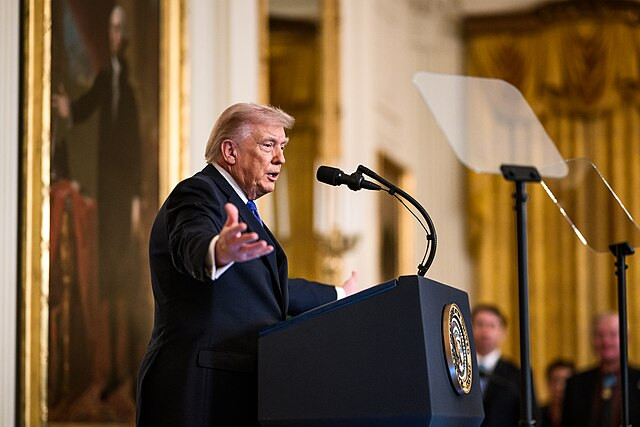
A viral claim that President Donald Trump was preparing a secret speech revealing extraterrestrial contact has unraveled after its alleged source denied any involvement, exposing the story as unfounded and reigniting concerns about misinformation in fringe research communities.
The episode began when filmmaker Mark Christopher Lee asserted he had obtained insider knowledge of an imminent UFO-related announcement tied to Trump. The claim gained rapid traction online, fueled by references to prominent figures in the UFO research space and suggestions of suppressed government disclosures.
Central to Lee's assertion was what he described as a private message from Robert Bigelow, a well-known aerospace entrepreneur and longtime funder of paranormal and UFO research. The alleged communication implied that powerful actors were obstructing full disclosure of extraterrestrial evidence.
The narrative spread quickly across social media platforms, where it was amplified by UFO enthusiasts and conspiracy-focused communities. Its appeal rested on a familiar structure: a high-level political figure, a hidden truth, and a credible insider warning of suppression.
The claim began to collapse after intervention from veteran investigative journalist George Knapp, who directly contacted Bigelow to verify the allegation. Knapp publicly stated: "I spoke to Robert Bigelow less than 30 minutes ago. He says he has never met, spoken to, or emailed Mr Lee."
Knapp further dismissed the story in stark terms, calling it "not only false, but preposterous," a statement that quickly shifted the narrative from intrigue to skepticism. Without confirmation from the alleged source, the claim lost its core evidentiary support.
Facing mounting scrutiny, Lee initially defended his reporting but later reversed course. In a subsequent statement, he acknowledged the lapse in verification, saying, "I messed up. I should never have shared that information without proper verification." He also issued an apology to both Knapp and Bigelow.
The incident highlights a recurring vulnerability within the UFO research ecosystem, where unverifiable sources and opaque information channels often allow unsubstantiated claims to gain traction. Analysts note that such narratives can spread faster than traditional fact-checking mechanisms can respond.
Observers say the case illustrates a broader dynamic in the digital information environment: credibility can be constructed quickly through association with recognizable figures, but it can collapse just as rapidly when primary sources refute involvement.