Allegations about the cognitive health of Donald Trump have resurfaced with renewed intensity, after psychologist John Gartner publicly claimed that the White House is concealing signs of potential decline-assertions that have fueled political debate but remain unverified by medical evidence or official disclosure.
Gartner, founder of the "Duty to Warn" group, argued in a recent interview that repeated references by Trump to cognitive testing should not be interpreted as reassurance. "We only give these tests if there is some concern about cognitive decline," he said, suggesting that the frequency of such evaluations indicates underlying issues rather than routine precaution.
He also pointed to reported visits to Walter Reed National Military Medical Center, claiming extended stays signal more comprehensive neurological assessments. "You do not go there for hours unless doctors are doing a full neuropsychological evaluation," Gartner said, adding that the pattern reflects "serious medical concerns" behind the scenes.
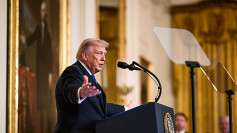
The claims have gained traction alongside scrutiny of Trump's recent public appearances. Critics have highlighted instances of extended, meandering remarks, including a widely circulated anecdote involving a "thousand dollar pen," which Gartner described as a potential example of "confabulation." He explained that such behavior involves individuals who "fill in memory gaps with fabricated stories."
"These are elaborate narratives that have no clear advantage to him politically," Gartner said. "This kind of behaviour is very diagnostic of dementia."
Supporters of the president have dismissed the interpretation, noting that Trump continues to deliver structured speeches and maintain a visible public schedule. Gartner countered that variability is not unusual. "People with dementia have good days and bad days," he said, suggesting that fluctuations in performance are consistent with cognitive impairment.
The most consequential allegation centers on whether aides are deliberately managing Trump's exposure. Gartner asserted, "there is a cover-up going on, absolutely," arguing that appearances may be tightly controlled to limit unscripted interactions that could raise further questions.
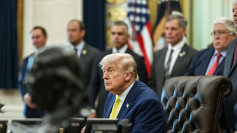
Observers have noted that recent events often involve shorter engagements and fewer extended press exchanges, though no official confirmation has been provided to support claims of deliberate concealment.
The debate has extended into national security considerations. Gartner described the situation as "a national security nightmare," warning that impaired decision-making at the presidential level could carry global implications.
He went further, invoking constitutional concerns tied to presidential capacity. In his assessment, Trump is "unable to discharge the powers and duties of his office," referencing the standard outlined in the 25th Amendment, though no formal proceedings or official evaluations have been initiated.