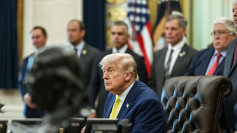
A former senior Justice Department official told Congress that President Donald Trump issued sweeping pardons to more than 1,500 defendants tied to the January 6 Capitol attack without standard vetting procedures, a process she said resulted in clemency for individuals with histories of serious violent crimes, including child sexual abuse and domestic violence.
Elizabeth "Liz" Oyer, the former U.S. Pardon Attorney, testified before the House and Senate Judiciary Committees that her office was excluded from the clemency decisions. "I learned about those pardons on the news just like every other American," she said, describing a breakdown in a process traditionally handled through career staff at the Department of Justice.
Oyer, who served nearly three years in the nonpartisan role, said her office of roughly 40 professionals was prepared to assist on Inauguration Day but was never consulted. Instead, she testified, the administration directed her team toward evaluating requests to restore firearm rights-an assignment she said was outside the office's traditional scope.
Her dismissal came shortly after she declined to recommend restoring gun rights to an individual she described as "a famous friend of the President" with a domestic violence conviction. Within hours, she said, she was removed from her position and escorted from the building.
The testimony has intensified scrutiny of the pardon process, particularly after investigative reporting identified cases in which individuals receiving clemency had prior or pending charges unrelated to the Capitol attack.
According to reporting by NPR and Axios, examples cited include:
- Defendants with convictions involving sexual abuse of minors and domestic violence
- Individuals facing pending charges related to child exploitation and assault
- Repeat offenders with extensive criminal histories spanning multiple violent offenses
In one case, Magistrate Judge David Keesler wrote that evidence against defendant David Daniel was "compelling and suggests Defendant engaged in sexual acts with two young girls in his own family," according to NPR. While the Jan. 6 pardon did not erase those charges, the release raised concerns among prosecutors and victim advocates.
Another case involved Theodore Middendorf, who had been convicted of predatory criminal sexual assault of a child and sentenced to 19 years in prison. Andrew Taake, who admitted to assaulting police officers during the Capitol riot, also faced a separate charge for online solicitation of a minor, with Harris County District Attorney Sean Teare stating, "We are already in the process of tracking Taake down."
Oyer's testimony also described unusual pressure from Justice Department leadership. Before her congressional appearance, she said two armed deputy U.S. Marshals were sent to her home to deliver a warning letter about disclosing internal deliberations. Her attorney, Michael Bromwich, called the move "unprecedented and entirely inappropriate."
The consequences of the pardons, critics argue, extend beyond procedural concerns. NPR reported that Andrew Paul Johnson, a pardoned defendant with a prior child sexual abuse conviction, reoffended after his release and is now serving a life sentence following new allegations involving minors.
Democratic lawmakers have seized on the findings to argue that the clemency decisions reflect broader policy concerns. Representative Jamie Raskin wrote in a committee memo, "Trump is systematically dismantling the offices and programmes we rely on to combat human trafficking and prosecute sex crimes."
Deputy Attorney General Todd Blanche has disputed aspects of Oyer's account, though Oyer told lawmakers that documentation supporting her claims-including emails and internal memos-remains within the Justice Department.