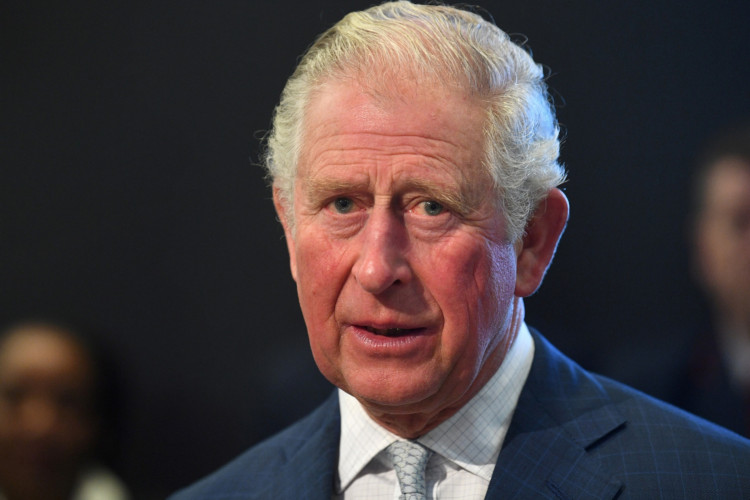
Buckingham Palace issued a rare public clarification after Donald Trump suggested that King Charles III would support his position on the Iran conflict, a claim the Palace moved quickly to counter as the monarch prepares for a high-profile U.S. state visit later this month.
In response to Trump's remarks in an interview with The Telegraph, a Palace source delivered a succinct rebuttal that underscored constitutional norms. "The King is above politics," the insider said, drawing a clear line between the monarchy and ongoing geopolitical disputes.
The intervention comes at a sensitive diplomatic moment, with King Charles scheduled to travel to Washington for his first state visit as monarch. The trip, expected to include a formal banquet at the White House and meetings with U.S. officials, is intended to reinforce transatlantic ties amid heightened tensions surrounding Iran.
Trump's comments, which included praise for the King as "a great representative for your country" and "a friend of mine," also suggested that Charles would have "taken a very different stand" from the current U.K. government. The assertion introduced the monarch into an active policy debate, challenging long-standing conventions that require the British sovereign to remain politically neutral.
The Palace's response, though brief, reflects the institutional imperative to maintain that neutrality. By avoiding a direct confrontation while correcting the record, officials signaled concern about preserving the monarchy's constitutional role, particularly as it intersects with foreign policy and diplomatic protocol.
Trump's remarks are consistent with his long-standing public fascination with the British royal family. He has frequently referenced his admiration for the monarchy, recalling how he watched the 1953 coronation of Queen Elizabeth II as a child and describing his mother as "enthralled by the pomp and circumstance."
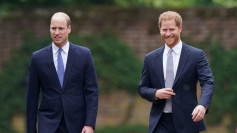
Over the years, Trump has cultivated relationships with senior royals, including Prince William and King Charles, while maintaining a more critical stance toward Prince Harry. In the same interview, Trump described Charles as "a good man" and "a wonderful and brave man," reinforcing a narrative of personal rapport that he has often emphasized in public appearances.
The timing of the remarks, however, adds complexity. The U.K. government, led by Prime Minister Keir Starmer, has taken a more measured approach to the Iran conflict than Trump's administration, creating potential friction in the bilateral relationship. Trump's suggestion that Britain's position is insufficient-paired with his comment, "We don't need people who join Wars after we've already won!"-highlights those divergences.
Diplomatic observers note that state visits are typically choreographed to avoid precisely this type of political entanglement. The monarch's role is ceremonial and symbolic, designed to project continuity and stability rather than policy alignment. Any perception that the King is privately endorsing one side in an international conflict risks undermining that framework.
The Palace's statement also reflects caution about unverified claims regarding private conversations between Trump and Charles. Officials have not confirmed any such discussions, and the response focused narrowly on reaffirming the principle of neutrality rather than addressing specific assertions.