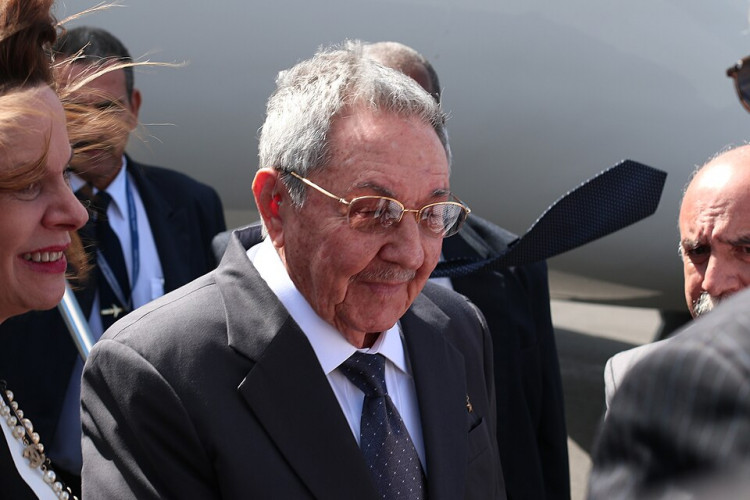
Thirty years after Cuban fighter jets shot down two civilian aircraft over the Florida Straits, killing four men linked to the Miami exile group Brothers to the Rescue, the U.S. Justice Department has announced criminal charges against former Cuban leader Raúl Castro in a case that reopens one of the darkest chapters in modern U.S.-Cuba relations.
The announcement was made Wednesday at Miami's Freedom Tower, a symbolic location for generations of Cuban exiles who fled Fidel Castro's communist government. Prosecutors tied Castro, who served as Cuba's defense minister during the 1996 attack and later became president, to the military operation that destroyed two unarmed Cessna planes flown by the humanitarian group.
The case immediately reignited emotions across South Florida, where the victims have long been regarded as symbols of the Cuban exile movement and where demands for accountability have persisted for decades.
The four men killed on Feb. 24, 1996, were:
- Carlos Alberto Costa, 29, a Miami Beach native who reportedly participated in more than 140 rescue missions searching for Cuban rafters.
- Armando Alejandre Jr., 45, a Vietnam veteran born in Havana who emigrated to the United States after the Cuban Revolution.
- Mario Manuel de la Peña, 24, a New Jersey-born pilot described by friends as deeply patriotic.
- Pablo Morales, 29, a former Cuban rafter who had once been rescued by Brothers to the Rescue before joining the organization himself.
A third aircraft escaped after pilot José Basulto radioed warnings that Cuban MiG fighter jets were approaching.
The shootdown triggered international outrage at the time. In 1999, a report backed by the International Civil Aviation Organization concluded that Cuba had used military force against civilian aircraft in international airspace, a finding that intensified pressure on Havana and hardened Washington's policy toward the island.
The Clinton administration responded by strengthening sanctions and signing the Helms-Burton Act, legislation that dramatically expanded the U.S. embargo against Cuba and reshaped bilateral relations for decades.
For many Cuban Americans, the attack was never viewed as an isolated military decision. Exile groups consistently argued that such an operation could not have occurred without authorization from Cuba's highest levels of leadership, including Raúl Castro and Fidel Castro.
The Justice Department's move now marks the first known criminal prosecution in the United States directly targeting a former Cuban head of state over the incident.
The charges arrive as the Trump administration escalates pressure on Havana following the collapse of Nicolás Maduro's government in Venezuela and a renewed effort by Washington to isolate leftist governments across Latin America.
Relations between Washington and Havana have sharply deteriorated in recent months. President Donald Trump's administration has expanded sanctions, tightened restrictions on Cuba's energy imports and increased diplomatic pressure on the island's leadership.
Secretary of State Marco Rubio recently proposed what he described as a "new relationship" with the Cuban people, including $100 million in food and medical assistance distributed outside the control of Cuba's government. At the same time, Rubio blamed Havana for the country's worsening economic and humanitarian crisis.
Cuba's government has rejected Washington's actions as economic warfare and accused the United States of attempting regime change through financial pressure and regional isolation.