A reported closed-door meeting between senior Pentagon officials and the Vatican's ambassador to Washington has raised tensions between the United States and the Holy See, after accounts of the exchange suggested unusually blunt language and historical references interpreted by some officials as coercive.
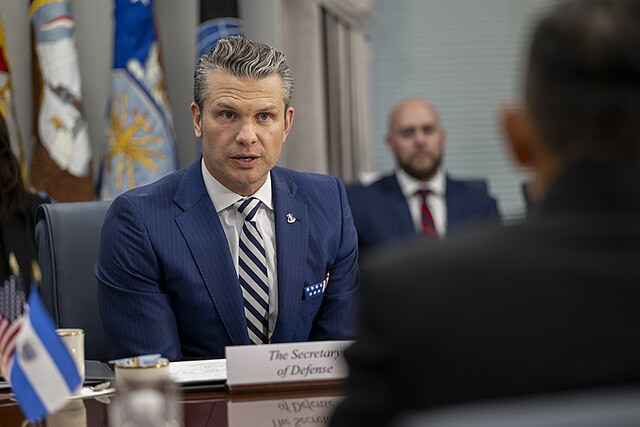
According to officials briefed on the encounter, Elbridge Colby, serving as under secretary for policy, summoned Cardinal Christophe Pierre to the Pentagon in January following remarks by Pope Leo XIV that were viewed by U.S. officials as critical of American foreign policy.
During the meeting, U.S. officials reportedly reviewed the pope's address in detail, objecting to language that described a shift in global diplomacy. In that speech, Pope Leo said that "a diplomacy that promotes dialogue and seeks consensus among all parties is being replaced by a diplomacy based on force."
Accounts cited by Vatican officials and independent reporter Christopher Hale indicate that the discussion escalated when a U.S. official referenced the Avignon Papacy, a period when the papacy was relocated from Rome under pressure from the French monarchy. Vatican sources interpreted the reference as a signal of potential pressure on the Church, though the precise intent remains disputed.
A Pentagon spokesperson rejected that characterization, describing the account as "highly exaggerated and distorted" and stating the meeting was "a respectful and reasonable discussion." The spokesperson added that the department "welcomes continued dialogue with the Holy See."
The episode appears to have had immediate diplomatic consequences. Vatican officials, according to people familiar with internal deliberations, reconsidered plans for Pope Leo to visit the United States later this year. Instead, the pontiff is expected to spend the Fourth of July on the Italian island of Lampedusa, a focal point for migration flows into Europe.
One Vatican official told The Free Press, "The administration tried every possible way to have the Pope in the US in 2026." Another added, "The Pope may well never visit the United States under this administration."
The development underscores broader tensions between the Vatican's emphasis on diplomacy and humanitarian concerns and the U.S. administration's more assertive strategic posture. Pope Leo has continued to speak forcefully on issues of war and peace. In a Palm Sunday address, he said, "Jesus is the King of Peace, who rejects war, whom no one can use to justify war," adding, "He does not listen to the prayers of those who wage war, but rejects them."
Vice President JD Vance, speaking in Hungary, addressed the reports cautiously. "I would actually like to talk to Cardinal Christophe Pierre and, frankly, to our people, to figure out what actually happened," he said. "I think it's always a bad idea to offer an opinion on stories that are unconfirmed and uncorroborated."