The White House said President Donald Trump rejected Iran's initial ceasefire proposal outright before agreeing to a revised framework, setting up a sharp dispute with Tehran ahead of scheduled negotiations in Islamabad. Officials confirmed the decision publicly on April 8, as tensions remained high despite a fragile two-week truce brokered by Shehbaz Sharif.
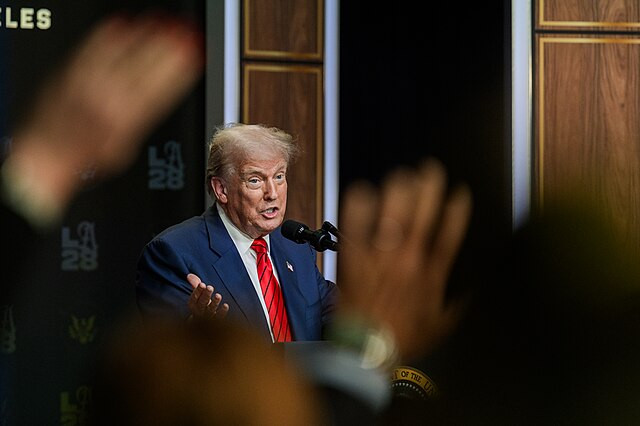
Press Secretary Karoline Leavitt told reporters that Iran's first submission was "fundamentally unserious, unacceptable and completely discarded." She added: "The Iranians originally put forward a 10-point plan that was fundamentally unserious, unacceptable and completely discarded. It was literally thrown in the garbage by President Trump and his negotiating team."
The administration said a revised Iranian proposal, also structured around 10 points, was ultimately considered a viable basis for talks. Leavitt said the second version aligned more closely with Washington's own 15-point framework delivered through Pakistani intermediaries in late March.
Tehran has rejected that characterization, insisting that the United States accepted the core elements of its original proposal. The conflicting accounts have created an early credibility gap ahead of negotiations scheduled for April 10 in Islamabad, which are expected to be the highest-level direct talks between the two countries in decades.
At the center of the dispute is uranium enrichment, a longstanding point of contention. Trump reiterated Washington's position in a Truth Social post, stating: "There will be no enrichment of Uranium," while also outlining plans to remove what he described as buried nuclear material under U.S. surveillance.
Leavitt reinforced that stance, saying the administration's red lines remain unchanged and emphasizing that U.S. negotiators had received indications Iran might transfer its stockpile of highly enriched uranium. She also pushed back on Iranian public messaging, stating: "That is false," in response to claims that Washington had accepted Tehran's original terms.
Iranian officials have taken a markedly different position. Parliamentary speaker Mohammad Bagher Ghalibaf said key elements of the framework had already been violated, including what he described as U.S. refusal to recognize Iran's right to enrichment. He argued that under those conditions, "a bilateral ceasefire or negotiations is unreasonable."
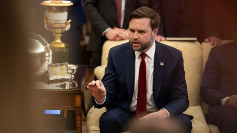
Vice President JD Vance dismissed those criticisms while speaking to reporters in Budapest. "I actually wonder how good he is at understanding English," Vance said, adding that the objections "didn't make sense in the context of the negotiations that we've had." He described the ceasefire as "fragile" but noted that multiple proposals were "floating around."
The diplomatic effort is unfolding alongside continued uncertainty on the ground. The Strait of Hormuz, a critical global energy corridor, remained largely closed as of April 9, despite being a central condition of the ceasefire. Regional tensions have also persisted, with Israel continuing operations in Lebanon outside the framework of the U.S.-Iran truce.
The U.S. delegation to Islamabad is expected to include Vance, senior adviser Jared Kushner and envoy Steve Witkoff, reflecting the administration's push to consolidate negotiations at the highest levels. Analysts say the talks represent a pivotal moment for both sides, with military escalation still a possibility if diplomatic efforts falter.
Iran expert Trita Parsi, cited by Al Jazeera, said the conflict has already reshaped perceptions of U.S. leverage. "Trump's failed use of force has blunted the credibility of American military threats, introducing a new dynamic into US-Iran diplomacy," he said.