A massive gas explosion at a coal mine in China's northern Shanxi province killed at least 90 workers and left several others missing, state media reported Saturday, marking the country's deadliest mining disaster in nearly two decades and reigniting scrutiny over industrial safety standards in one of China's most coal-dependent regions.
The blast struck the Liushenyu coal mine in Changzhi city's Qinyuan county on Friday evening while 247 workers were underground, according to reports from China's state-run Xinhua News Agency and state broadcaster CCTV. Authorities said nine miners remained unaccounted for as rescue operations continued through Saturday.
More than 120 people were hospitalized, including several in critical condition, after suffering burns, smoke inhalation and exposure to toxic gases. Chinese officials dispatched hundreds of emergency workers, medics and rescue personnel to the scene as crews worked through unstable underground conditions.
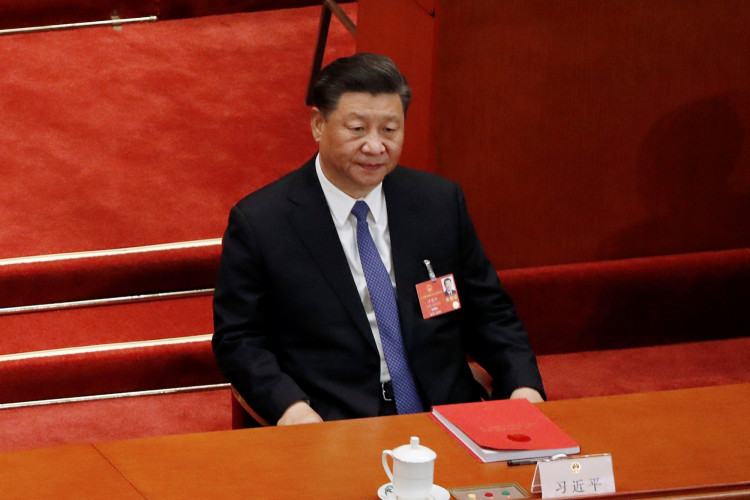
Chinese President Xi Jinping ordered an "all-out effort" to locate missing workers and treat the injured, while also calling for accountability.
Xi urged the "proper handling of the aftermath of the accident and urged a thorough investigation into its cause, with accountability pursued in accordance with the law," according to Xinhua.
Premier Li Qiang echoed the demand for accountability and called for what state media described as "rigorous and uncompromising investigation" into the disaster.
Survivors described scenes of chaos underground as toxic gas and smoke spread rapidly through the tunnels.
"I smelled sulfur 'like firecrackers' and saw smoke," injured miner Wang Yong told CCTV. "I told people to run."
"As I ran, I saw people being choked by the smoke. And then I blacked out," Wang added.
In another interview cited by state media, Wang recalled seeing "a puff of smoke" before losing consciousness underground for roughly an hour.
The mine, operated by the Shanxi Tongzhou Coal & Coke Group, had already appeared on a 2024 list from China's National Mine Safety Administration identifying operations with "severe safety hazards." Regulators reportedly warned specifically about dangerously high gas levels at the facility.
Key details emerging from the investigation include:
- The mine had an annual production capacity of 1.2 million tons
- Carbon monoxide sensors reportedly triggered alarms before the explosion
- Rescue efforts were complicated because mine blueprints allegedly did not match the actual underground layout
- At least 755 rescue and medical personnel were deployed to the site
- Several roads around the area were sealed off during overnight operations
State media later reported that individuals "responsible for" the company had already been "placed under control in accordance with the law."
The explosion underscored the continued dangers inside China's vast coal sector despite years of government promises to improve industrial safety. China has reduced mining fatalities significantly since the early 2000s through tighter regulations and modernization campaigns, but major accidents continue to occur across the country's energy-intensive regions.
The disaster is the deadliest mine accident in China since 2009, when an explosion in Heilongjiang province killed more than 100 people. In 2023, another high-profile collapse at an open-pit mine in Inner Mongolia killed 53 workers.
Shanxi remains central to China's energy system, producing nearly one-third of the country's coal output. The province, home to roughly 34 million people, mined about 1.3 billion tons of coal last year alone.