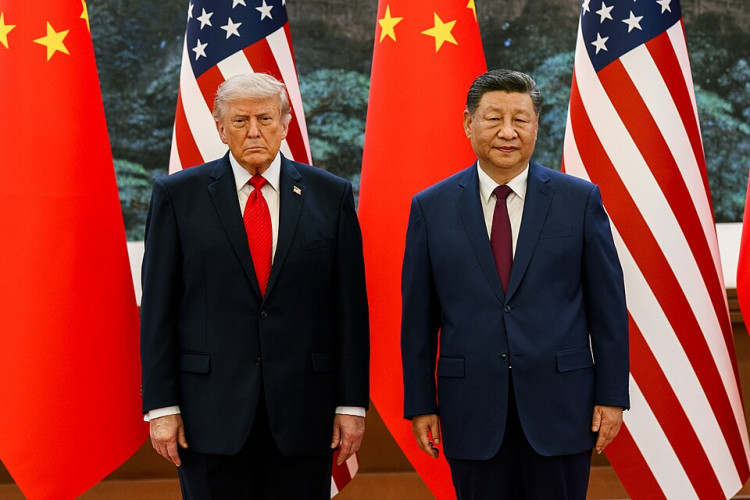
Donald Trump and Xi Jinping emerged from a closely watched summit in Beijing this week projecting sharply different messages about the future of US-China relations, after Chinese officials revealed Xi warned the United States that mishandling Taiwan could lead to "clashes and even conflicts."
The warning, delivered during a private meeting at Beijing's Great Hall of the People, immediately intensified international discussion about the growing risk of confrontation between the world's two largest powers. The talks came amid already elevated tensions over Taiwan, US arms sales, trade disputes and military competition across the Indo-Pacific.
According to China's foreign ministry and state-linked media, Xi described Taiwan as "the most important issue in China-US relations" and warned that failure to manage the issue carefully could place bilateral ties "in great jeopardy."
The language marked one of Beijing's starkest public warnings toward Washington in recent months. Chinese foreign ministry spokesperson Mao Ning said Xi stressed that the Taiwan issue could lead to "clashes and even conflicts" if handled improperly.
The remarks landed awkwardly beside Trump's far warmer public tone. Before the closed-door talks began, the US president praised Xi personally, telling him: "You're a great leader. Sometimes people don't like me saying it, but I say it anyway, because it's true."
Trump continued: "It's an honour to be with you. It's an honour to be your friend."
The president also predicted that "the relationship between China and the USA is going to be better than ever before," even as Chinese officials used official readouts to emphasize confrontation risks rather than diplomatic breakthroughs.
The divergence highlighted the deeper strategic tensions beneath the summit's carefully choreographed optics. Trump's three-day visit to Beijing featured ceremonial welcomes, military pageantry and highly controlled public appearances, but few substantive agreements have emerged publicly so far.
Behind the scenes, Taiwan remained central to the discussions.
Beijing has repeatedly condemned Washington's support for Taipei, particularly a proposed US weapons package reportedly valued at roughly $11 billion. Chinese officials view foreign military support for Taiwan as interference in Chinese sovereignty, while successive US administrations have framed arms sales as part of broader commitments under the Taiwan Relations Act.
Trump's own position on Taiwan has often appeared deliberately flexible. During his previous presidency, he approved major arms sales to Taipei and expanded diplomatic engagement with the island. At other moments, however, he suggested Taiwan-related issues could become part of broader negotiations with Beijing.
That ambiguity has unsettled both allies and adversaries.
Xi appeared to address the broader geopolitical rivalry directly during the summit, invoking the so-called "Thucydides Trap," a foreign policy theory suggesting that rising powers and established powers historically drift toward military confrontation.
"Cooperation benefits both sides, while confrontation harms both," Xi said, according to Chinese state accounts. He added that China and the United States "should be partners rather than rivals."