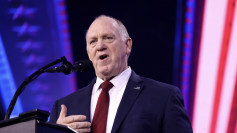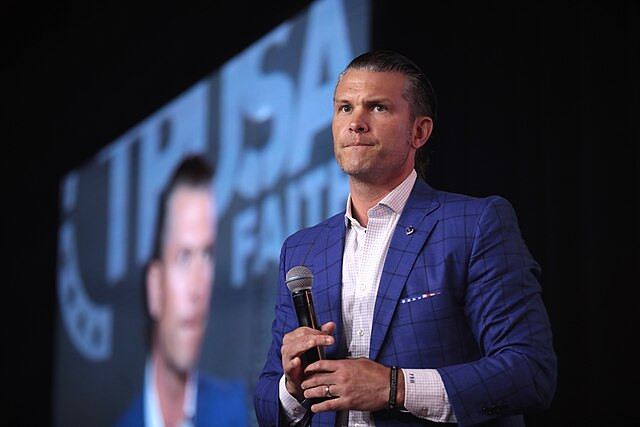
U.S. Defense Secretary Pete Hegseth sparred with reporters during a Pentagon briefing as questions over the Trump administration's Iran policy intensified, highlighting growing tension between public messaging and developments on the ground. The exchange, which quickly went viral, came as the fragile ceasefire between the United States and Iran showed early signs of strain.
The confrontation unfolded when Hegseth was pressed on apparent inconsistencies in U.S. rhetoric. He had previously described President Donald Trump as having "chose mercy," while earlier warning that U.S. forces would "give no quarter to Iranian troops," prompting a question about whether such messaging could endanger American personnel.
"Do you think your comments may have put American troops at risk?" a reporter asked.
Hegseth rejected the premise, responding, "No. I try to be nice up here, but you did listen to what I said, right?" He added, "Typical ABC. It was an indictment framed as a question. No, you've had your chance."
The exchange escalated when another journalist attempted to interject with an update on ongoing hostilities. "Excuse me. Why are you so rude? Just wait. So nasty," Hegseth said, cutting off the question and shifting the tone of the briefing from policy explanation to personal confrontation.
Clips of the interaction spread rapidly across social media, where critics questioned the defense secretary's composure. Some users described the performance as "pathetic," while others argued that a senior national security official should not appear reactive under pressure, particularly during an active geopolitical crisis.
The briefing took place against a backdrop of uncertainty surrounding a Pakistan-brokered ceasefire intended to halt weeks of escalating conflict. While the agreement was framed by Washington as a step toward de-escalation, reports of Iranian-linked ballistic missile launches on Wednesday raised doubts about its durability.
Hegseth sought to balance deterrence with diplomacy in his remarks, describing recent U.S. operations as "an overwhelming victory" while emphasizing that military action could resume "at a moment's notice." The dual message reflected the administration's attempt to maintain leverage even as negotiations move forward.
Confusion over control of the Strait of Hormuz has further complicated the situation. The waterway, through which a significant share of global oil supply flows, remains a central point of contention. Iranian actions suggesting restrictions on maritime traffic have appeared to contradict U.S. expectations tied to the ceasefire.
U.S. media coverage has underscored the disconnect between announcements and developments. On ABC's World News Tonight, anchor David Muir reported that "just hours after Trump announced the two-week ceasefire, Iran then said it had closed the Strait of Hormuz," highlighting the lack of alignment between the two sides.
Chief White House Correspondent Mary Bruce added that negotiations expected to begin in Pakistan face significant hurdles. "The two sides are not on the same page on a host of issues," she said, pointing to unresolved differences that could undermine diplomatic progress.
Statements from regional actors have reinforced the fragility of the arrangement. Pakistani Prime Minister Shehbaz Sharif, who helped broker the ceasefire, acknowledged reports of violations, while Iranian President Masoud Pezeshkian framed the agreement as reflecting Tehran's own terms.