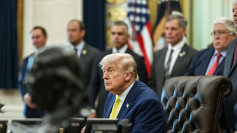
Donald Trump and Pope Leo XIV are at the center of a widening diplomatic strain after the pontiff declined an invitation to attend the United States' 250th Independence Day celebrations, opting instead to travel to Lampedusa, a symbolic migrant gateway in the Mediterranean.
The decision, confirmed by Vatican officials, has been interpreted by diplomats and analysts as more than a scheduling choice. It comes amid intensifying disagreements between Washington and the Holy See over foreign policy, migration, and the broader direction of global diplomacy.
The invitation had been extended earlier through channels that included JD Vance, though individuals familiar with the exchange described the encounter as inconclusive, with no firm commitment from the pontiff. The absence now carries heightened significance given the timing and geopolitical backdrop.
Instead of appearing in Washington on July 4, Pope Leo XIV is expected to mark the day in Lampedusa, a site closely associated with migration crises and humanitarian appeals within the Catholic Church. The location has long served as a focal point for papal messaging on displacement and human dignity.
In recent remarks, the pope has sharpened his rhetoric on global conflict. He warned that "war is back in vogue" and cautioned that "a diplomacy that promotes dialogue and seeks consensus among all parties is being replaced by a diplomacy based on force." While he did not explicitly reference the United States, the timing has led many observers to interpret the comments as directed, at least in part, at current Western policies.
The pontiff has also emphasized moral boundaries in conflict, stating that those who wage war cannot claim religious justification, a position that has resonated among Catholic leaders concerned about escalating international tensions.
The diplomatic friction has been further complicated by reports of a January meeting between senior U.S. defense officials and Vatican representatives. According to accounts cited by journalists and Vatican sources, American officials told a papal envoy that the United States "has the military power to do whatever it wants in the world" and that "the Catholic Church had better take its side."
Some officials present at the meeting allegedly invoked the historical precedent of the Avignon Papacy, a period when political authorities exerted control over the Church. Vatican officials, according to reporting by Christopher Hale, interpreted that reference in part as a warning, with some viewing it as "a threat to use military force against the Holy See."
Neither the White House nor the Pentagon has confirmed those characterizations. A Defense Department spokesperson has previously described similar accounts as "highly exaggerated and distorted," framing engagements with Vatican officials as routine diplomatic exchanges.