Donald Trump said Chinese leader Xi Jinping would give him a "big, fat, hug" over his handling of the Iran crisis and the reopening of the Strait of Hormuz, a claim that has raised eyebrows among diplomats given the absence of any confirmed agreement between Washington and Beijing.
In a post on Truth Social, Trump framed his Middle East strategy as aligned with China's economic interests, writing, "China is very happy that I am permanently opening the Strait of Hormuz. I am doing it for them, also - And the World. This situation will never happen again. They have agreed not to send weapons to Iran."
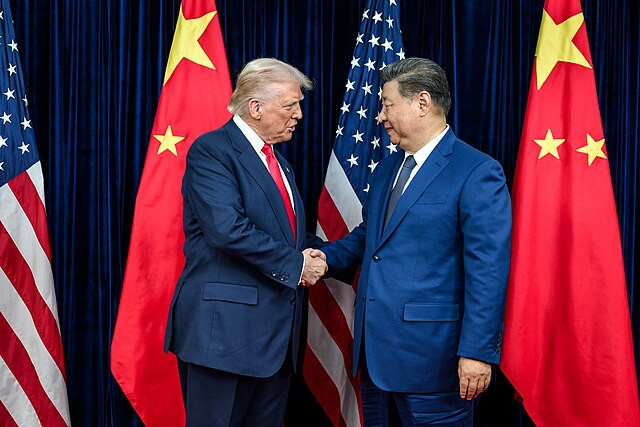
He added a personal note on his expected meeting with Xi, stating, "President Xi will give me a big, fat, hug when I get there in a few weeks. We are working together smartly, and very well! Doesn't that beat fighting??? BUT REMEMBER, we are very good at fighting, if we have to - far better than anyone else!!!"
The remarks come amid escalating tensions in the Persian Gulf, where the Strait of Hormuz remains a critical chokepoint for global energy flows. Roughly one-fifth of the world's oil supply passes through the narrow waterway, making stability in the region a priority for major importers, particularly China.
Trump has repeatedly asserted that his administration is close to resolving the conflict with Iran and restoring normal shipping conditions. In recent interviews, he said the war was "close to over," even as no formal ceasefire or agreement has been publicly announced.
Key claims made by Trump include:
- China is "very happy" with U.S. efforts in the Strait of Hormuz
- Beijing has "agreed not to send weapons to Iran"
- The Strait will be "permanently" reopened
None of these assertions have been independently verified. Neither the Chinese government nor U.S. defense officials have publicly confirmed any agreement involving weapons transfers or joint coordination on Iran.
Military officials have acknowledged increased U.S. operations in the region, including enforcement measures tied to maritime traffic, but have not echoed Trump's language about permanent solutions or diplomatic breakthroughs.
The contrast is particularly evident when measured against Beijing's own messaging. In recent remarks reported by state broadcaster CCTV, Xi emphasized China's strategic partnership with Russia, describing the "stability and certainty" of those ties as "particularly precious" in a volatile global environment.
During a meeting with Russian Foreign Minister Sergei Lavrov, Xi called for "closer and stronger strategic collaboration" to defend both countries' "legitimate interests" and to support the broader Global South. The focus on Moscow underscores China's current geopolitical priorities, which appear distinct from Trump's framing of U.S.-China cooperation on Iran.