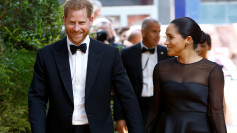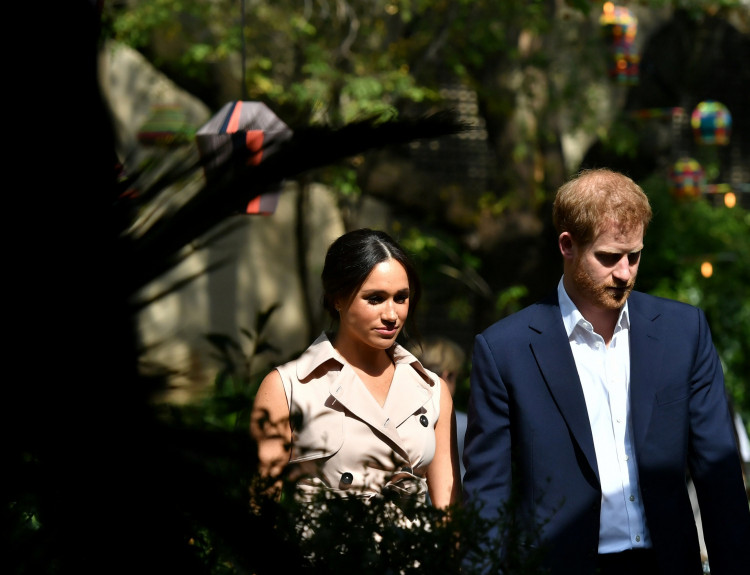
Meghan Markle told students at Swinburne University of Technology in Australia that she endured a decade of sustained online harassment, describing herself as "the most trolled person in the entire world," while criticizing social media platforms as profit-driven systems that amplify abuse. Her remarks, delivered alongside Prince Harry during a mental health-focused visit, have reignited debate over digital accountability and the couple's long-running campaign against online toxicity.
Speaking at an event hosted in partnership with youth mental health organization Batyr, Meghan framed her personal experience as part of a broader systemic issue affecting young people. "I can speak to that really personally, which is why I like to listen, because it rings true for me in a very real way," she said, according to PA Media.
She then detailed the scale of what she claims to have faced: "For now, 10 years, every day for 10 years, I have been bullied and attacked. And I was the most trolled person in the entire world. Now, I'm still here."
Her comments shifted quickly from personal testimony to structural critique. Meghan argued that social media companies are fundamentally misaligned with user safety, saying they are "not incentivised to stop" harmful behavior because engagement-often driven by outrage-underpins their business models. She described platforms as "that industry, that billion-dollar industry, that is completely anchored and predicated on cruelty to get clicks."
She added bluntly, "That's not going to change. So you have to be stronger than that," positioning resilience as a necessary response in the absence of systemic reform.
The claim that she was the "most trolled person in the entire world" has not been independently verified by social media companies, and no supporting data was presented during the discussion. The remarks, as delivered, reflected her personal characterization rather than a confirmed metric.
The couple's visit to Australia is part of a broader effort to engage with youth on mental health and digital safety, issues they have repeatedly linked to their decision to step back from royal duties in 2020. Their advocacy has increasingly focused on the intersection of online platforms, public scrutiny, and psychological well-being.
Prince Harry complemented Meghan's remarks with his own account of mental health struggles, offering a more introspective tone. "I waited until I was literally in the fetal position, much older, lying on the kitchen floor," he said. "Until I was like, okay maybe this therapy thing - maybe I should try it."
He also revisited the long-term impact of losing his mother, Princess Diana, stating, "It killed my mum and I was very much against it, and I stuck my head in the sand for years and years."
Harry described a shift in perspective over time, adding: "Eventually I realised: well, hang on, if there was somebody else in this position, how would they be making the most of this platform and this ability and the resources that come with it to make a difference in the world? And also, what would my mum want me to do?"
The Duke also addressed policy responses, praising Australia's controversial restrictions on youth access to social media. "Australia took the lead," he said. "Your government was the first country in the world to bring about a ban... from a responsibility and leadership standpoint - epic."
He cautioned, however, that such measures reflect systemic failure rather than ideal policy design. "It should have never, ever got to a ban," he said, arguing that platforms should have addressed safety concerns earlier.