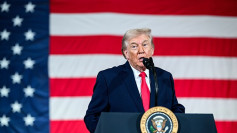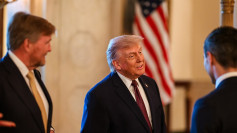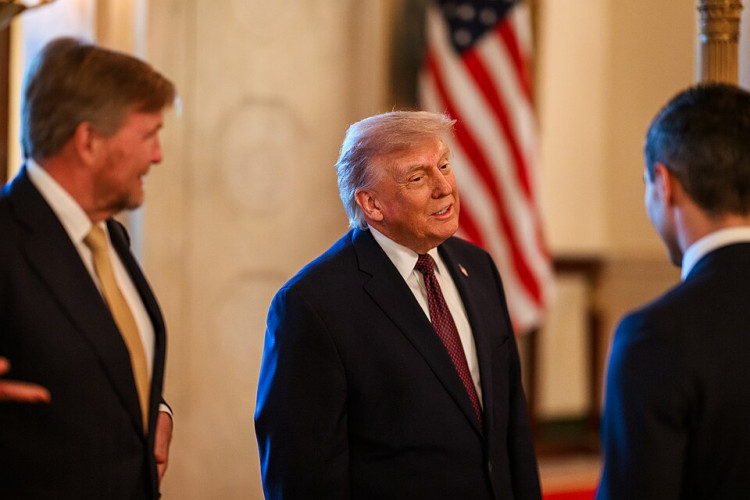
A viral claim that Dan Caine physically intervened to block Donald Trump from launching a nuclear strike on Iran has gained millions of views online, but fact-checkers say there is no verified evidence that such an incident occurred.
The allegation originated from Larry C. Johnson, a retired CIA analyst, during an appearance on the "Judging Freedom" podcast hosted by Andrew Napolitano. Johnson asserted that Trump attempted to "use the nuclear codes" during an emergency White House meeting and that Caine intervened to stop him, though he cited only "one report coming out of the White House" without naming a source.
The claim quickly spread across social media after political commentator Jimmy Dore amplified the clip, with some posts suggesting Caine had "stormed out" of the meeting. That version of events has been labeled false by fact-checkers.
According to Lead Stories, searches across major news databases, including Google News and Yahoo News, found no corroborating reports. The outlet concluded that an event of such magnitude would likely have been widely reported if confirmed. Neither the White House, the Pentagon nor Caine's office has issued statements verifying the allegation.
The episode underscores how unverified claims can gain traction when they intersect with existing tensions. Public reporting has documented differences between Trump and Caine over military strategy related to Iran, including concerns raised by the chairman about operational risks and potential casualties.
In February, a Washington Post report detailed Caine's reservations about the scale and complexity of potential military actions. Those concerns surfaced again publicly on April 8, when Caine described a ceasefire as "a pause," not peace-language that contrasted with Trump's earlier warning that "a whole civilization will die tonight, never to be brought back again."
The broader geopolitical context has heightened sensitivity around such claims. The closure of the Strait of Hormuz in early March triggered a surge in global energy prices, with Brent crude exceeding $120 per barrel and U.S. gasoline prices reaching $4 per gallon by the end of the month. The International Energy Agency characterized the disruption as the largest supply shock in modern oil market history.
Military actions have continued in parallel. Following the collapse of peace talks in Islamabad, the U.S. ordered a naval blockade targeting Iranian-linked shipping. By mid-April, Caine confirmed that 13 vessels had been turned back, with operations expanding beyond the Persian Gulf.
Johnson himself suggested that Trump's public messaging during the conflict may have been designed to influence markets, referencing reports that traders generated more than $1 billion in profits from positions aligned with geopolitical developments.