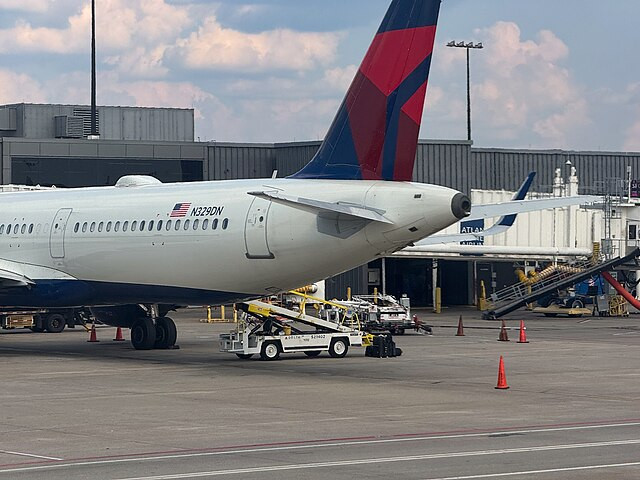
The U.S. aviation system is facing a convergence of operational and economic shocks, as more than 3,000 flight delays, a deepening staffing crisis at Transportation Security Administration, and a war-driven fuel spike combine to disrupt travel nationwide and force airlines to scale back schedules.
On Tuesday alone, over 3,000 delays and 105 cancellations were recorded across major U.S. airports, according to Federal Aviation Administration data and FlightAware tracking. San Francisco International Airport led the disruption, logging 475 delays and 69 cancellations after weather-related traffic restrictions were imposed.
The cascading effect spread quickly. Hartsfield-Jackson Atlanta International Airport, Boston Logan International Airport, and John F. Kennedy International Airport followed as key bottlenecks, with additional strain reported in Houston, San Diego and Indianapolis. Carriers including SkyWest, United, Southwest, American and Delta accounted for the majority of disruptions.
Behind the delays, officials point to a growing structural problem: security staffing shortages. Acting TSA Administrator Ha Nguyen McNeill told Congress that the agency is experiencing the longest wait times in its history, warning, "We are facing a potential perfect storm."
The staffing breakdown traces back to a February funding lapse within the Department of Homeland Security, which left TSA officers working without pay for weeks. More than 480 officers have since quit, and replacements face a training timeline of four to six months before becoming operational.
The pressure is intensifying ahead of a major global event. McNeill noted that the U.S. expects an additional 6 to 10 million travelers linked to the upcoming World Cup, compounding an already strained system.
At the same time, airlines are confronting a separate financial shock driven by geopolitical tensions. A U.S. naval blockade affecting the Strait of Hormuz-one of the world's most critical oil transit routes-has sharply increased fuel costs, with jet fuel prices rising from $2.50 to $4.88 per gallon by early April.
Airlines have begun adjusting capacity in response.
- United Airlines has cut roughly 5% of planned flights
- Delta reported $400 million in additional fuel costs in March alone
- Air Canada will suspend JFK service from June through October
United CEO Scott Kirby underscored the financial strain, stating, "In United's best year ever, we made less than $5 billion (£3.7 billion)," while warning that sustained fuel prices could add $11 billion in annual costs.
The price increases are already filtering down to consumers. Last-minute fares to Caribbean destinations have risen as much as 74% on some routes, while average transcontinental bookings have climbed to $414, up sharply from $167 prior to the fuel surge.