SpaceX is preparing for what could become one of the largest initial public offerings in financial history, seeking a valuation of approximately $1.75 trillion and aiming to raise at least $75 billion as investors continue pouring capital into companies tied to advanced technology, communications infrastructure and artificial intelligence.
According to Reuters, the Elon Musk-led company has begun sharing its valuation target with potential investors ahead of a formal IPO roadshow expected to begin this week. If achieved, the proposed valuation would place SpaceX among the most valuable publicly traded companies in the world and represent a dramatic leap from previous private-market estimates.
The planned offering is expected to be structured as an all-primary share sale, meaning the proceeds would flow directly to SpaceX rather than existing shareholders. The deal is also expected to include a greenshoe option that would allow underwriters to sell additional shares if investor demand exceeds the initial allocation.
The scale of the proposed transaction has immediately attracted attention across Wall Street.
Several major banks are leading the offering, including Goldman Sachs, Morgan Stanley, Bank of America, Citigroup and JPMorgan, according to Reuters. Bloomberg News reported that SpaceX has been negotiating underwriting fees below 0.75%, a remarkably low level for an IPO of this magnitude.
Even with reduced fees, the transaction could generate substantial revenue for participating investment banks because of its size.
Key details reported so far include:
- Target valuation: approximately $1.75 trillion
- Expected capital raise: at least $75 billion
- Structure: all-primary offering
- Employee allocation: roughly 5% of shares through a directed share program
- Lead underwriters: Goldman Sachs, Morgan Stanley, Bank of America, Citigroup and JPMorgan
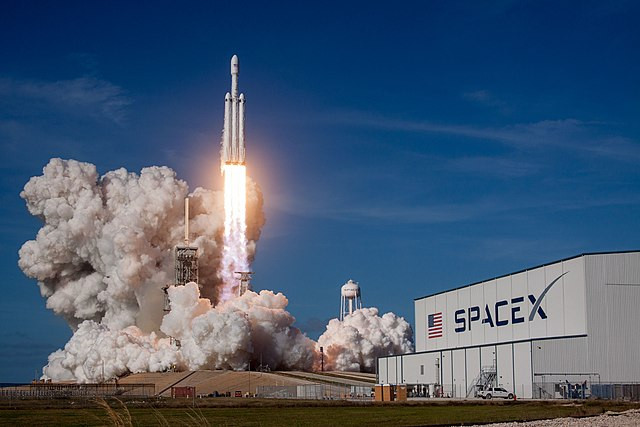
Founded by Elon Musk in 2002, SpaceX has evolved from a startup challenging established aerospace contractors into the dominant force in commercial space launches. Through its Falcon rocket family, crew transportation missions and government contracts, the company has become a critical partner to both NASA and defense agencies.
At the same time, Starlink has emerged as a major growth engine. The satellite internet network now serves customers across dozens of countries and has become an increasingly important contributor to the company's revenue base. Investors view the combination of launch services and global broadband connectivity as one of the company's strongest competitive advantages.
The proposed valuation, however, is not without controversy.
Reuters reported that Morningstar recently estimated SpaceX's value at roughly $780 billion, less than half the figure the company is reportedly seeking in the IPO. Analysts cited uncertainty surrounding some long-term growth assumptions as well as questions about future technology initiatives.
Despite the valuation gap, investor appetite appears strong. The offering arrives during a period of renewed momentum in equity capital markets, with institutional investors increasingly seeking exposure to companies positioned at the center of AI infrastructure, communications networks and next-generation computing systems.