Donald Trump acknowledged that the U.S. paused military momentum in its ongoing conflict with Iran, telling reporters he "took a little break" from operations as the war extended beyond the four-to-six-week timeline his administration had initially projected.
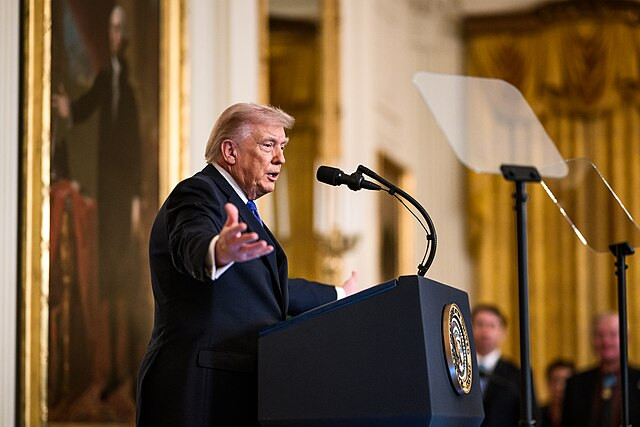
The remark, made during an April 23 Oval Office exchange, came after reporters pressed Trump on why the campaign-launched in late February-had not reached a resolution nearly eight weeks into the conflict. The admission has intensified scrutiny of the administration's shifting narrative around the duration and objectives of the war.
"Well, I hoped that, but I took a little break," Trump said. "I gave them a break." The comment suggested that a ceasefire period was being factored into the timeline, rather than treated as a deviation from earlier expectations of a rapid military outcome.
The exchange grew tense as Trump responded sharply to questioning, at one point telling a reporter, "You're such a disgrace," before defending his broader strategy. He argued that initial objectives had largely been achieved early in the campaign, stating: "I took the country out militarily in the first four weeks. Now what we're doing is sitting back and seeing what deal, and if they don't make a deal, then I'll finish it up militarily."
The president's framing contrasts with earlier public statements that had emphasized speed and decisiveness. In early March, Trump told The New York Times, "Well, we intended four to five weeks," a projection echoed in subsequent remarks. Defense Secretary Pete Hegseth offered a slightly broader estimate at the time, saying, "You can say four weeks, but it could be six, it could be eight, it could be three."
As the conflict has progressed, Trump's characterizations have varied. He described the campaign at one point as "an excursion that will keep us out of a war," while also declaring, "We won. We won the -- in the first hour, it was over," before adding, "We got to finish the job, right?" The evolving language has drawn attention to the gap between initial expectations and current realities.
The operational landscape has also shifted. Following a ceasefire brokered through Pakistan earlier in April, the United States imposed a naval blockade on Iranian shipping routes, particularly affecting traffic through the Strait of Hormuz. Iran has contested the blockade and announced countermeasures, escalating tensions in a region critical to global energy supply.
Trump reinforced the blockade's economic rationale, saying, "I said, wait a minute if we open the strait that means they're going to make $500 million a day," adding, "I don't want them to make $500 million a day until they settle this thing." The statement underscores the administration's strategy of combining military pressure with economic leverage.
Recent incidents have heightened the stakes. U.S. forces seized an Iranian-flagged vessel in the Gulf of Oman, while Iranian authorities have challenged the legality of such actions. Separately, Trump issued a directive for U.S. naval forces to "shoot and kill" any Iranian boats suspected of laying mines, signaling a more aggressive posture even as diplomatic channels remain uncertain.