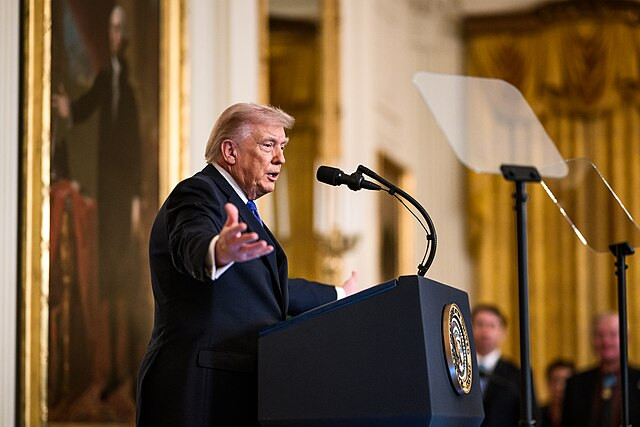
Donald Trump renewed his long-running attacks on the U.S. justice system and former Federal Bureau of Investigation Director James Comey during a Fox News interview, accusing Comey of helping fuel politically motivated investigations into alleged Russian ties before Trump even entered the White House.
The remarks came as Comey faces renewed public scrutiny after a judge scheduled a July trial tied to a controversial social media post prosecutors allege could be interpreted as threatening Trump, now the 47th president of the United States. The latest clash has revived one of the most consequential political feuds of the past decade, reconnecting current legal battles to the Russia investigation that shadowed Trump's first administration.
"Before I came to office, I started hearing rumours about Russia," Trump said during the interview. "I said, what the hell do I have to do with Russia?"
Trump argued that allegations involving Russia were amplified by political opponents and sections of the media as part of a coordinated effort to undermine him politically. He also escalated personal criticism of Comey, repeatedly referring to the former FBI chief as a "dirty cop," though he did not present new evidence supporting the accusation.
The comments followed recent court developments involving Comey. According to court filings, prosecutors are pursuing charges connected to an Instagram image posted by Comey last year showing seashells arranged into the numbers "86 47." Prosecutors argued the image could be interpreted as a threat against Trump.
Comey has denied wrongdoing and said he deleted the post after learning some viewers interpreted it as encouraging violence. Trump later amplified the controversy by sharing a video criticizing Comey and repeating the accusation that he was a "dirty cop," adding that "everybody knew it."
The dispute traces back to one of the defining political controversies of Trump's presidency. In 2017, Trump fired Comey while the FBI was investigating Russian interference in the 2016 election and examining contacts involving Trump campaign associates. The dismissal intensified political pressure in Washington and contributed to the appointment of Special Counsel Robert Mueller.
Mueller's investigation ultimately concluded that Russia interfered in the 2016 election through hacking operations and online influence campaigns, though investigators did not establish a criminal conspiracy between the Trump campaign and the Russian government.
Trump has repeatedly dismissed the Russia investigation as a "hoax," while Comey and former federal officials have consistently defended the bureau's conduct and denied accusations of partisan bias.
The latest exchange also reflects broader tensions surrounding federal law enforcement and politically sensitive investigations in the United States. Trump allies have long argued that prosecutors and intelligence agencies pursued him more aggressively than other political figures, particularly in cases involving classified documents, election-related investigations and alleged obstruction issues.
Critics of Trump, meanwhile, maintain that investigators followed established legal procedures and that the former president's rhetoric toward federal agencies risks undermining confidence in law enforcement institutions.
When asked during the Fox News interview whether he feared future Democratic administrations could target Republican officials through similar investigations, Trump rejected suggestions he was seeking revenge and instead framed his position as a matter of fairness and accountability.
He described the years of scrutiny surrounding his campaign and presidency as evidence that the justice system had already been weaponized against him before he formally took office after the 2016 election.