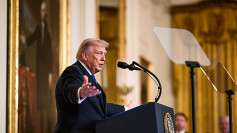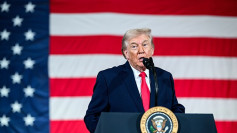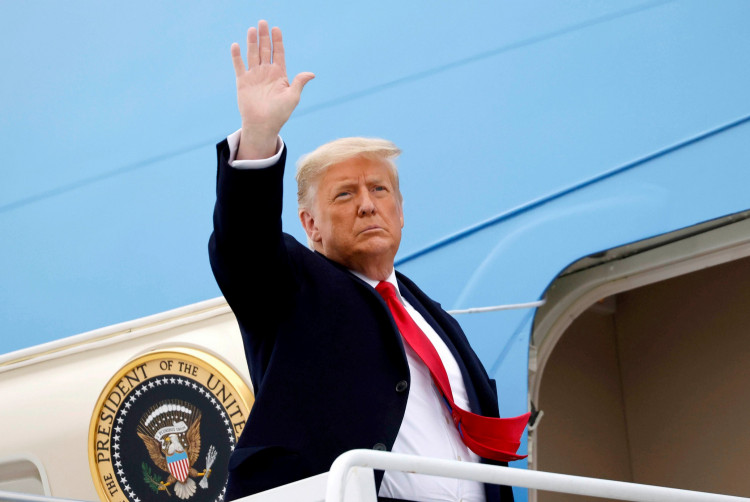
Donald Trump triggered new questions about the future leadership of the Republican Party after publicly asking supporters whether they preferred JD Vance or Marco Rubio as a potential 2028 presidential nominee, before pointedly refusing to offer any formal endorsement of his own vice president.
The remarks came during a White House dinner event where Trump informally tested audience reactions to the two men, both widely viewed as possible heirs to the MAGA political movement once Trump leaves office.
According to accounts of the event reported by The Hill and other outlets, Trump turned the gathering into an impromptu political sounding board, asking attendees directly: "Who likes J.D. Vance? Who likes Marco Rubio?"
"All right. Sounds like a good ticket. J.D. is a perfect - That was a perfect ticket," Trump continued, before adding a notable caveat. "By the way, I do believe that's a dream team. But these are minor details. That does not mean you have my endorsement under any circumstance. But you know ... I think it sounds like presidential candidate and vice presidential candidate."
The exchange immediately drew attention because Vance currently occupies the vice presidency and has frequently been described by Republican strategists as the natural front-runner to inherit Trump's political coalition after 2028.
Instead of reinforcing that assumption, however, Trump appeared to place Vance and Rubio into open competition in front of donors and political allies while carefully preserving his own leverage over the party's future succession battle.
Political commentators and online critics quickly characterized the moment as awkward for Vance, particularly because Trump publicly floated alternative ticket combinations without firmly backing his vice president as the future standard-bearer of the Republican Party.
The episode also highlighted Rubio's growing stature inside the administration. Since becoming secretary of state, the former Florida senator has taken on a significantly expanded international role, representing the White House during diplomatic meetings at the Vatican and major foreign-policy briefings tied to ongoing global conflicts.
Some Republican operatives now reportedly view Rubio as a more broadly electable or establishment-friendly figure heading into the post-Trump era. Vox previously reported that certain strategists see Rubio's traditional conservative profile and foreign-policy experience as potentially appealing to both MAGA voters and more conventional Republican donors.
Interviews cited by The Daily Beast reflected that evolving sentiment among some conservative voters. One retiree reportedly said: "I think Vance is great, but I think Rubio would be great, too," while another described Rubio as "a great alternative."
For Trump, the ambiguity may be intentional. Throughout his political career, the president has rarely rushed to elevate a single long-term successor, often preferring to encourage internal competition among allies while maintaining himself as the center of gravity within the Republican Party.
That approach has historically allowed Trump to preserve influence over ambitious political figures eager for his approval while avoiding early commitments that could weaken his negotiating power inside the party.