Vladimir Putin's propaganda machine has escalated its nuclear rhetoric against Britain, with a prominent Kremlin broadcaster publicly naming London, Leicester, Reading and Suffolk as potential targets in what she described as a possible Russian "nuclear ultimatum" to the West over support for Ukraine.
The remarks, aired on Russian state television by RT editor-in-chief Margarita Simonyan, represent one of the most explicit public discussions yet of hypothetical strikes on British territory since Russia launched its full-scale invasion of Ukraine in 2022.
Simonyan claimed the Russian Defense Ministry had identified locations allegedly tied to arms production, reconnaissance activity or military support for Kyiv. She framed the sites as legitimate targets if Moscow formally entered what she described as a broader war with NATO-backed countries.
The comments arrive after more than two years of intensifying confrontation between Moscow and Western governments, including the United Kingdom, which has supplied weapons, training and intelligence support to Ukrainian forces resisting Russia's invasion.
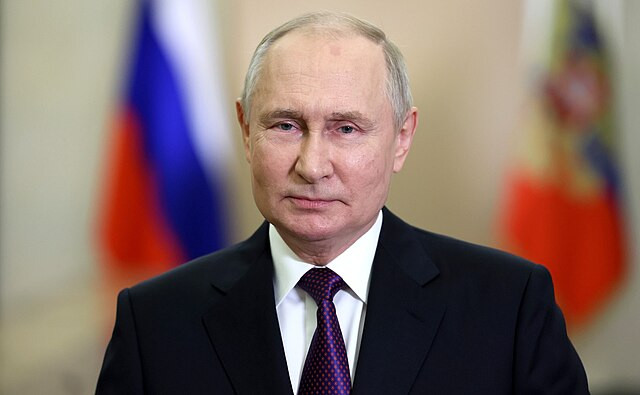
During the broadcast, Simonyan sketched out a scenario in which Putin would address the public and declare that Russia's "special military operation" had effectively become a direct conflict with Europe because of continued Western military assistance to Ukraine.
According to her account, Putin would tell Western governments that Russia had attempted to complete operations in Ukraine quickly before NATO states transformed the conflict into what she characterized as a "full-blown war."
She then described what she called "the most likely outcome" of the crisis: a Russian nuclear ultimatum directed at Europe and the wider West.
Simonyan claimed Russian authorities had already "published a list" of facilities viewed by Moscow as actively participating in the war effort against Russia. Within that framework, she specifically referenced London, Leicester, Reading and Suffolk - including RAF Mildenhall in Suffolk - as locations falling within the reach of Russian missile systems.
The rhetoric moved beyond general deterrence language into unusually graphic public messaging.
Simonyan referenced Russia's Oreshnik hypersonic missile and the RS-28 Sarmat intercontinental ballistic missile, known in Western reporting as "Satan-2," both of which Moscow has repeatedly promoted as capable of bypassing Western missile defenses.
In the scenario she described, European civilians would effectively be warned to leave areas near the identified sites.
She urged people in Europe to "go somewhere else," arguing that residents still had the ability to leave potential target zones before any escalation. She also suggested Western governments would face a stark choice: withdraw support for Ukraine or risk catastrophic consequences.
The broadcast blended nuclear threats with political messaging aimed at European audiences.
Simonyan argued that European voters should remove governments supporting Ukraine and replace them with leaders more favorable to Moscow's position. She claimed, without evidence, that Western societies had become politically weak and incapable of resisting their own governments' policies.
At points, the segment veered into mockery of British politics. Simonyan joked that Britain "change their prime ministers more often than they change rubber gloves shaped like Ukraine," before referencing former Prime Minister Boris Johnson and his "cool hairstyle."