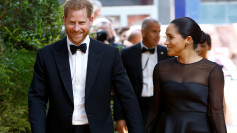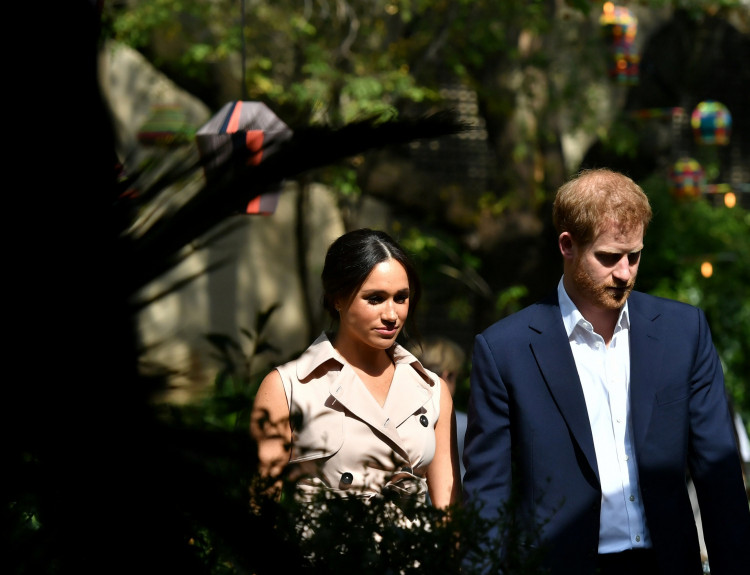
Meghan Markle and Prince Harry are facing renewed speculation over their finances after a report claimed the duchess was left stunned by the true scale of Harry's wealth and that growing concerns over spending have become a source of tension inside the couple's Montecito household.
The claims, published by columnist Rob Shuter in his Naughty But Nice Substack, rely heavily on unnamed insiders and offer no independently verified financial documents. But the report has reignited public fascination with the Sussexes' post-royal business model, particularly as several of their major commercial ventures enter a more uncertain phase.
According to Shuter, Meghan allegedly entered the marriage believing Harry's personal fortune was significantly larger than it ultimately proved to be.
"'When she discovered the actual numbers, it was a huge shock,'" one unnamed insider reportedly claimed. "'Yes, Harry is wealthy - but not "private jets forever without worrying" wealthy.'"
The report estimated Harry's net worth at between $50 million and $70 million, though no public filings or official disclosures were cited to support the figures. Representatives for the Sussexes have not publicly commented on the claims.
Even by Hollywood standards, those numbers would still place the couple among the ultrawealthy. But the report argues the issue is less about absolute wealth than the gap between the Sussexes' global branding and the practical realities of maintaining a high-cost public lifestyle after stepping away from royal funding.
Since relocating to California in 2020, Harry and Meghan have built an image closely tied to celebrity influence, prestige media partnerships and luxury visibility. Their Netflix deal, Harry's memoir Spare, podcast ventures and lifestyle branding efforts transformed the couple into one of the most commercially recognizable royal-adjacent brands in the world.
Yet several of those projects have recently lost momentum.
Spotify ended its partnership with Archewell Audio in 2023. Meghan's podcast output slowed afterward, while reports surrounding Netflix's long-term strategy with the Sussexes have remained mixed. Meghan's latest lifestyle initiative, As Ever, is widely viewed as an attempt to establish a more stable standalone business identity beyond streaming contracts and royal memoirs.
Shuter's report suggested some of the couple's earlier ventures "'had not panned out as planned,'" though it did not specify which projects were underperforming financially.
The report also painted a picture of differing approaches to money management inside the marriage.
One source claimed: "'Harry worries about money constantly now. He never imagined financial stress would dominate his life the way it does today.'"
Another insider reportedly described Meghan as more willing to continue pursuing ambitious deals and expansion opportunities despite financial uncertainty, while Harry was portrayed as increasingly cautious about protecting existing wealth.
"'Harry wants to slow down, protect the money they still have, and live more privately,'" a third source alleged.
None of those characterizations have been confirmed publicly, and the article itself acknowledged that key elements rely entirely on anonymous sourcing rather than verifiable financial evidence.
Still, the speculation taps into a broader public debate surrounding the Sussexes' post-royal identity. Unlike working members of the British royal family, Harry and Meghan must fund private security, staffing, travel, media production and legal battles independently. Those obligations reportedly include multimillion-dollar annual security expenses as well as the maintenance costs tied to their Montecito estate.
Critics of the couple have increasingly questioned whether the Sussexes' lifestyle is sustainable without a continuous stream of blockbuster media deals. Supporters, meanwhile, argue the pair remain commercially powerful global figures whose earning potential extends far beyond traditional entertainment contracts.