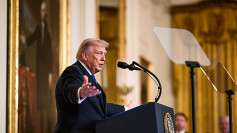
Donald Trump is facing renewed scrutiny over his physical and cognitive health after claiming he had "settled eight wars," a remark that triggered backlash online and intensified an already heated debate surrounding the president's fitness for office.
The comments, delivered during a recent exchange with reporters in Washington, came as critics, medical commentators and political opponents continue dissecting Trump's speeches, public appearances and social media activity ahead of another high-stakes presidential cycle.
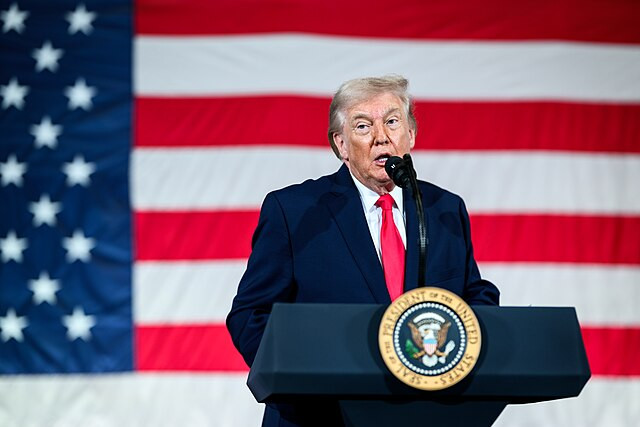
"I settled eight wars. And in every case, the people, the prime ministers or presidents, wrote letters thanking me," Trump said.
No public record exists documenting eight separate conflicts personally resolved by Trump, and the White House has not provided clarification or evidence supporting the claim. The remark quickly spread across social media platforms, where clips of the exchange fueled arguments from critics that the president is increasingly detached from reality.
One widely shared reaction online stated: "The President has lost touch with reality."
The latest controversy arrives amid mounting attention on Trump's health, an issue that has lingered around the 78-year-old Republican for years but has intensified as more observers scrutinize his speech patterns, physical movements and public demeanor.
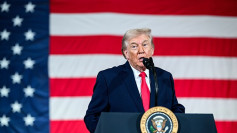
Trump's rallies and media appearances frequently drift into abrupt tangents, unfinished thoughts and loosely connected anecdotes. In one widely discussed speech last year, Trump pivoted unexpectedly from criticizing political rivals to praising Hollywood actor Cary Grant.
"How good was Cary Grant?" Trump told supporters during the event, abruptly changing subjects mid-speech.
Critics have described such moments as evidence of cognitive decline, while allies argue Trump's unscripted speaking style reflects improvisation rather than impairment.
The debate escalated further after a group of American physicians published an assessment in the British Medical Journal on April 30 arguing Trump was "mentally unfit."
"It doesn't take a psychiatrist to know that the US President has demonstrated erratic behaviour," the doctors wrote.
The assessment did not include formal neurological testing, medical scans or detailed cognitive evaluations, leaving the conclusions open to criticism from Trump allies and some medical ethicists who oppose diagnosing public figures without direct examination.
The White House has consistently rejected suggestions that Trump is mentally or physically impaired. Officials point instead to his campaign schedule, international travel and public appearances as evidence of stamina and endurance uncommon for someone nearing 80.
White House press secretary Karoline Leavitt previously dismissed speculation surrounding visible bruising on Trump's hands, attributing it to frequent handshaking during public events.
Still, the physical scrutiny has only intensified.
Recent photographs from political appearances have shown Trump with visible discoloration and makeup covering parts of his hands, while videos circulating online have prompted fresh discussion about his gait, balance and overall mobility.
Supporters largely dismiss those observations as politically motivated attacks against an aging president who continues maintaining a punishing public schedule. Critics argue the repeated incidents collectively paint a more troubling picture.
Trump's long-publicized eating habits have also resurfaced as part of the broader conversation surrounding his health. Reports over the years describing heavy consumption of fast food and Diet Coke have become deeply embedded in the public narrative around him, often resurfacing whenever questions emerge about his stamina or appearance.
At the same time, online speculation surrounding Trump's health has increasingly blurred the line between legitimate public-interest scrutiny and internet rumor culture.
Unverified claims ranging from hidden medical treatments to viral theories about mobility aids and adult diapers have circulated widely across social media, often amplified by partisan commentators and meme accounts without supporting evidence.
None of those claims have been substantiated publicly.