United States intelligence agencies are reportedly developing potential military response options involving Cuba as the Donald Trump administration intensifies pressure on Havana over security concerns, alleged drone capabilities and longstanding political tensions between the two countries.
According to CBS News, officials familiar with the matter said U.S. intelligence and defense agencies have begun analyzing how the Cuban government would respond if Washington pursued military action, including broader assessments of regional fallout, escalation risks and strategic consequences.
The reported planning effort comes during a sharp deterioration in U.S.-Cuba relations that has accelerated following recent indictments targeting former Cuban leader Raúl Castro and renewed accusations surrounding Havana's military ties with adversaries including Russia and Iran.
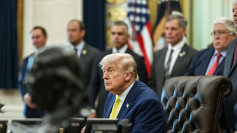
Trump sought Thursday to downplay immediate fears of military escalation.
"There won't be additional escalation in Cuba because I don't think there needs to be," Trump told reporters.
Behind the scenes, however, intelligence officials are reportedly conducting scenario analyses examining both the effectiveness and political consequences of possible operations. CBS News reported the discussions remain preliminary, with no final military proposal formally presented to Trump.
The administration has simultaneously escalated legal and diplomatic pressure on Havana.
Federal prosecutors recently announced charges against Castro connected to the 1996 downing of two civilian aircraft operated by the exile group Brothers to the Rescue. According to the indictment, Castro faces allegations including conspiracy to kill U.S. nationals, four counts of murder and destruction of aircraft charges.
Five additional individuals were also charged, including a Cuban fighter pilot allegedly involved in the operation.
The move triggered an immediate backlash from Cuban officials, who accused Washington of manufacturing legal and security pretexts for more aggressive action against the island.
Miguel Díaz-Canel condemned the indictment in a social media statement, calling it "a political action."
"The accusation reveals the arrogance and frustration felt by the representatives of the empire in the face of the unshakable resolve of the Cuban Revolution and the unity and moral strength of its leadership," Díaz-Canel wrote.
"This is a political action with no legal basis whatsoever, aimed solely at adding to the fabricated case file they are building to justify the recklessness of a military aggression against Cuba," he added.
At the center of growing U.S. concern are intelligence assessments involving Cuban drone capabilities.
According to CBS News, American intelligence agencies believe Cuba has acquired more than 300 military drones since 2023. Officials cited in the report said Cuban authorities had discussed potential strike scenarios involving targets such as the U.S. naval base at Guantánamo Bay Naval Base, American military vessels and possibly even Key West.
Officials emphasized there is no indication of an imminent attack, but described the growing arsenal as a strategic concern given Cuba's increasingly close security relationships with Moscow and Tehran.
The allegations were firmly rejected by Bruno Rodríguez Parrilla, who accused Washington of constructing what he described as a false justification for sanctions or military confrontation.
"Cuba neither threatens nor desires war," Rodríguez wrote on social media.
He added that Cuba was exercising its "right to legitimate self-defense recognized by the UN Charter."