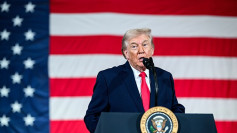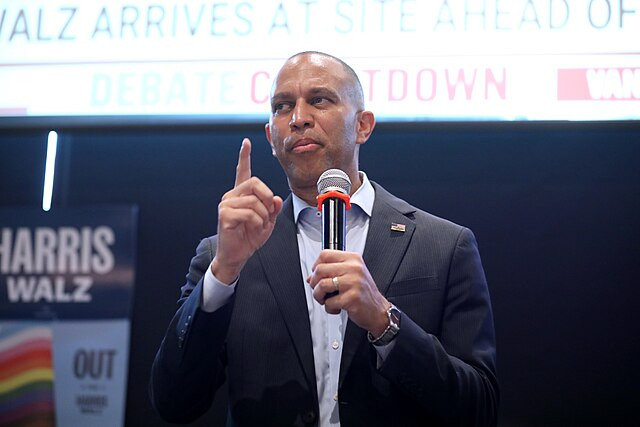
Donald Trump, Gregory Meeks and Hakeem Jeffries moved to the center of a deepening clash over presidential war powers Thursday after House Republicans abruptly canceled a planned vote that could have restricted the president's authority to continue military operations tied to Iran without congressional approval.
The canceled vote exposed growing fractures inside Congress over the White House's handling of the Iran conflict and highlighted rising bipartisan unease about how far executive military power has expanded during Trump's presidency. Democratic lawmakers immediately accused Republican leaders of pulling the measure because it had enough support to pass.
In a sharply worded statement, Democratic leaders said, "Republicans cowardly pulled a scheduled vote on a War Powers Resolution-legislation that would have passed with bipartisan support and required the President to end the conflict in the Middle East."
The measure, introduced by Meeks, sought to require congressional authorization before additional military escalation involving Iran. According to lawmakers familiar with internal discussions, support for the resolution had grown in recent days as some Republicans privately expressed frustration over limited congressional briefings surrounding U.S. military operations.
Meeks accused GOP leadership of avoiding political damage rather than procedural complications.
"It had the votes without question and they knew it," Meeks told reporters, arguing Republican leaders were attempting to shield vulnerable members from taking a public position on the war.
House Republican leadership offered little immediate explanation for the sudden reversal. Earlier Thursday, Republican leaders had indicated the vote would move forward before it was quietly removed from the House schedule. The resolution is now expected to return after lawmakers return from the Memorial Day recess in June.
The dispute comes as Congress faces mounting pressure over its constitutional role in authorizing military force. Similar efforts to constrain presidential authority advanced in the Senate earlier this week, where several Republicans joined Democrats in supporting limits on Iran-related military action.
Among the Republicans backing Senate efforts was Bill Cassidy, who said after the vote: "While I support the administration's efforts to dismantle Iran's nuclear program, the White House and Pentagon have left Congress in the dark on Operation Epic Fury. Until the administration provides clarity, no congressional authorization or extension can be justified."
The Senate vote signaled that skepticism over the administration's handling of the Iran conflict is no longer confined to Democrats alone. Republicans including Rand Paul, Susan Collins and Lisa Murkowski also supported efforts to curb unilateral military authority.
Trump has defended the administration's actions by arguing Iran's nuclear ambitions present an urgent security threat. The White House has also maintained that current hostilities have effectively paused because of a ceasefire arrangement, potentially complicating enforcement of any war powers resolution that eventually clears Congress.
At the same time, diplomatic negotiations surrounding Iran remain unsettled. Reuters reported that Iranian Supreme Leader Mojtaba Khamenei has directed officials to keep the country's enriched uranium stockpile inside Iran, rejecting proposals that would transfer the material abroad.