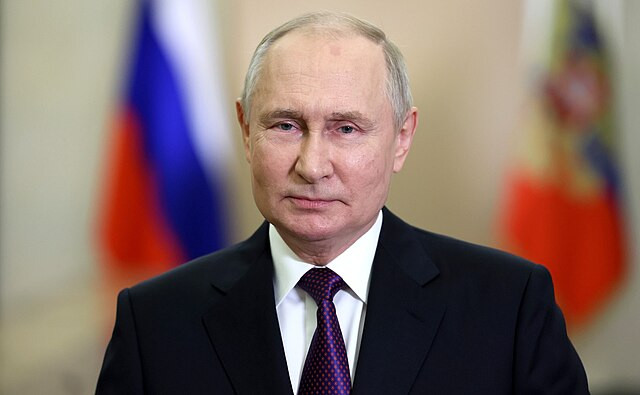
Russian President Vladimir Putin has placed longevity research at the center of a multibillion-dollar national strategy, backing projects ranging from gene therapies and organ printing to the cultivation of human-compatible organs in genetically engineered animals, according to a report by The Wall Street Journal.
The effort reflects a broader push by Moscow to position itself at the forefront of emerging biotechnology while addressing demographic challenges and extending healthy life expectancy. Russian officials have described the initiative as a long-term scientific priority, with the Kremlin publicly supporting research aimed at slowing aging and replacing damaged organs.
The Wall Street Journal reported that Russia has devoted tens of billions of dollars to longevity-related programs in recent years, funding a range of projects that would once have been considered experimental. Among them are efforts involving 3D-bioprinting technology, regenerative medicine, and advanced genetic treatments designed to combat the biological effects of aging.
One of the flagship initiatives focuses on gene therapy intended to slow cellular deterioration. Speaking about the technology last month, Deputy Science Minister Denis Sekirinsky said the treatment "represents one of the most promising avenues in the fight against aging."
The research aligns with a broader national program announced by Putin in 2024. The initiative seeks to improve public health outcomes and, according to Russian officials, save approximately 175,000 lives before the end of the decade.
Russian scientists involved in the program have reported progress in several areas of regenerative medicine. According to The Wall Street Journal, researchers claim they have successfully bioprinted human cartilage tissue and a mouse thyroid gland, developments they hope will eventually lead to the creation of transplantable human organs.
Two technologies have emerged as particularly important within the government's strategy:
- 3D-printing living tissues and organs
- Growing human-compatible organs inside genetically modified mini-pigs
Supporters of the program argue that advances in these fields could eventually reduce transplant shortages and transform the treatment of chronic diseases. Researchers involved in the effort have reportedly set a goal of achieving practical human organ replacement technologies before the decade ends.
Putin has also spoken publicly about the possibilities offered by biotechnology. During a meeting with Chinese President Xi Jinping last year, a conversation captured by a hot microphone revealed the two leaders discussing advances in life-extension science.
According to translations of the exchange, Putin referenced future medical breakthroughs that could dramatically extend human lifespans. His interpreter was heard saying in Chinese: "Biotechnology is continuously developing."
The interpreter continued: "Human organs can be continuously transplanted. The longer you live, the younger you become, and [you can] even achieve immortality."
Xi responded by noting that "some predict that in this century humans may live to 150 years old."
Putin later confirmed that the conversation had focused on longevity and emerging biomedical technologies. The exchange offered a rare glimpse into the Russian leader's personal interest in life-extension research, an area increasingly attracting attention from governments, investors and technology entrepreneurs worldwide.
The Kremlin emphasized the breadth of the effort when responding to questions about the initiative. "In the Russian Federation, work is under way on a whole range of scientific programs in this field," the Kremlin told The Wall Street Journal.
Despite the ambitious goals, questions remain about the scientific maturity of many of the projects. The Wall Street Journal noted that, unlike longevity ventures associated with prominent Western investors such as Jeff Bezos and Peter Thiel, much of Russia's research has yet to produce a substantial body of peer-reviewed work in major international scientific journals.