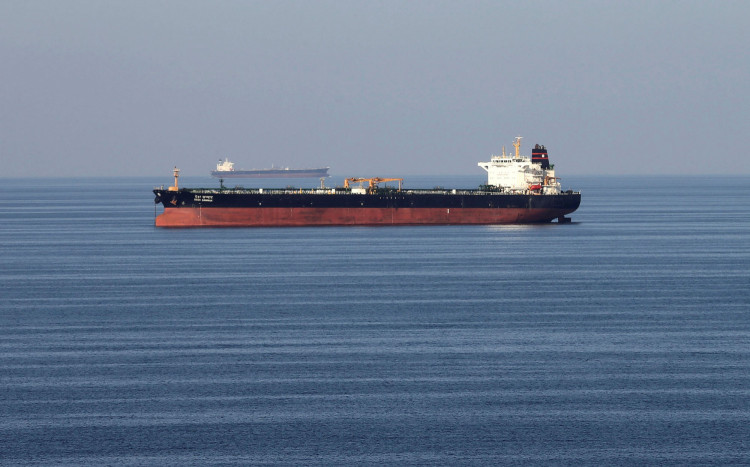
Iran is seeking to introduce a voluntary payment system for commercial vessels transiting the Strait of Hormuz, a move that has reportedly gained support from several Gulf states as President Donald Trump's administration pauses military operations to pursue negotiations with Tehran. The proposal, reported by Reuters, emerges as the United States and Iran remain engaged in high-stakes diplomacy over regional security and maritime stability in one of the world's most strategically important waterways.
According to Reuters, Oman-which shares control of the Strait of Hormuz with Iran-has secured backing from other Gulf countries for a framework under which ships could voluntarily contribute fees while passing through the narrow shipping corridor. The proposal would stop short of imposing mandatory tolls and instead mirror an existing arrangement in Southeast Asia.
Under the reported framework, the system would resemble the model used in the Strait of Malacca, where Indonesia, Malaysia and Singapore invite shipping companies to make voluntary financial contributions. Those payments help fund initiatives including environmental protection, navigational safety and search-and-rescue operations rather than functioning as compulsory transit charges.
The proposal comes after a sharp reduction in military activity around the Strait of Hormuz. President Donald Trump suspended U.S. strikes last Friday, arguing that diplomacy deserved an opportunity before additional military action was considered. Speaking to Axios on Monday, Trump indicated negotiations with Tehran had intensified but warned the diplomatic window would remain limited.
"We're in very deep talks," Trump told Axios, while making clear that patience would not last indefinitely. When asked how long diplomacy would be allowed to continue, he replied: "Not much time. Either it goes fast or not at all."
Trump also suggested that multiple parties with direct knowledge of Iran had encouraged restraint. "'All of the people that deal with Iran asked me: 'Don't fire,'" Trump told Axios on Monday, adding that he believes Tehran wants to reach an agreement. His comments came alongside earlier warnings that the United States could take "very strong military action" if negotiations fail to produce results.
Axios separately reported that military assessments also influenced Washington's decision to halt operations. According to the outlet, Gen. Brad Cooper, commander of U.S. Central Command (CENTCOM), concluded that the campaign against Iranian assets near the Strait of Hormuz had reached its practical limits. Axios said Cooper recommended ending the strikes, advice that reportedly contributed to Trump's decision to suspend further attacks.
While Washington has emphasized negotiations, Iranian officials have publicly downplayed the prospect of renewed dialogue. Iranian Foreign Ministry spokesperson Esmaeil Baghaei said during a Monday press conference that Tehran had not requested another round of talks with the United States, rejecting suggestions that Iran was actively seeking renewed diplomatic engagement.
Baghaei said resuming negotiations was not part of Iran's "DNA." At the same briefing, he maintained that Iran continues to exercise control over activity in the Strait of Hormuz, where Iranian forces have targeted vessels that do not coordinate their passage. He added that Tehran intends to pursue a system under which ships would pay tolls for using the waterway.