Oil prices surged Monday as investors reacted to worsening tensions between the United States, Iran, Israel and Hezbollah, with negotiations between Washington and Tehran appearing increasingly uncertain and fresh military exchanges raising concerns about potential disruptions to global energy supplies.
Brent crude, the international benchmark, climbed 6.80% to $97.32 a barrel by 10:45 a.m. ET, while West Texas Intermediate rose nearly 8% to $94.30. The sharp gains came as traders weighed the possibility of broader conflict involving key shipping routes in the Middle East.
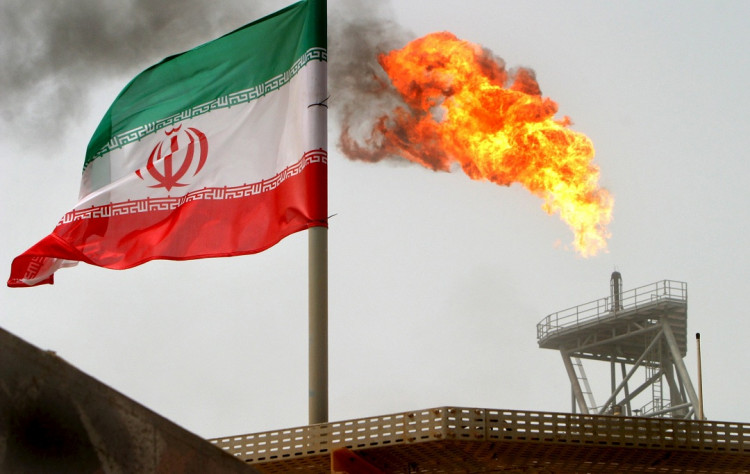
The latest market rally followed reports from Iran's Tasnim news agency that Tehran had suspended talks with the United States in response to Israel's expanding military operations in Lebanon. The report also said Iran and allied groups were considering measures targeting some of the world's most strategically important waterways.
Tasnim reported that members of the "Resistance Front," including groups aligned with Iran in Yemen, Lebanon and Iraq, could move to block the Strait of Hormuz and the Bab el-Mandeb Strait.
"The immediate cessation of the Zionist regime's aggressive and brutal army operations in Gaza and Lebanon and the necessity of the regime's complete withdrawal from the occupied areas in Lebanon have been emphasized by Iranian officials and negotiators, and there will be no talks until Iran and the resistance's views on this matter are met," Tasnim said, according to The Times of Israel.
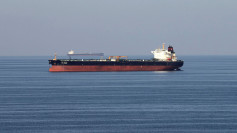
The Strait of Hormuz remains one of the world's most critical oil transit chokepoints, while the Bab el-Mandeb Strait connects the Red Sea to the Gulf of Aden and serves as a vital route for cargo moving toward the Suez Canal.
Iranian Foreign Minister Abbas Araghchi linked developments in Lebanon directly to broader ceasefire arrangements involving Washington and Tehran.
"The ceasefire between Iran and the US is unequivocally a ceasefire on all fronts, including in Lebanon," Araghchi wrote on social media.
"Its violation on one front is a violation of the ceasefire on all fronts. The US and Israel are responsible for the consequences of any violation," he added.
The diplomatic breakdown coincided with renewed military activity along Israel's northern border. After months of attempting to limit strikes in Beirut, Israeli leaders signaled a tougher approach as Hezbollah continued launching rockets, missiles and drones.
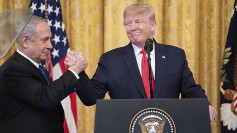
"Following the repeated violations of the ceasefire in Lebanon by the Hezbollah terror organization and the attacks against our cities and citizens, Prime Minister Benjamin Netanyahu and Defense Minister Israel Katz instructed the IDF to strike terror targets in the Dahiyeh quarter of Beirut," the officials said in a joint statement.
Israel also issued a large-scale evacuation warning covering southern Lebanon, further fueling concerns that the conflict could widen.
Meanwhile, U.S. officials appeared to indicate growing frustration with the lack of progress in ceasefire efforts. Axios cited a U.S. official suggesting Washington's opposition to Israeli strikes in Beirut could soften as negotiations stall.
"The U.S. does not expect Israel to absorb ongoing attacks on its civilians by a terrorist organization," the official said.
At the same time, direct tensions between Washington and Tehran have intensified. U.S. Central Command said Sunday it conducted "self-defense strikes on Iranian radar and command control sites for drones in Goruk, Iran and Qeshm Island" following what it described as hostile actions against U.S. assets.
Iran's Revolutionary Guard Corps responded by claiming it had struck the source of an attack on a telecommunications tower. While Iranian officials did not disclose the location, Kuwait's military said Monday it was "responding to hostile missile and drone threats," without identifying the origin of the attack.