President Donald Trump announced a 50% tariff on a broad range of Canadian goods Monday, reopening a major trade confrontation with Canada one day after appearing publicly with Prime Minister Mark Carney at the FIFA World Cup final. The levies, scheduled to take effect in 30 days, will cover products including wine, hockey sticks and cement while exempting energy, potash, fish and critical minerals.
The White House said Trump signed three proclamations invoking Section 338 of the Trade Act of 1930. The administration argued that Canada had discriminated against U.S. industries and failed to adequately address wildfire smoke that has spread into American communities.
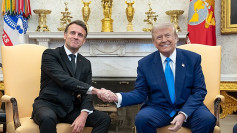
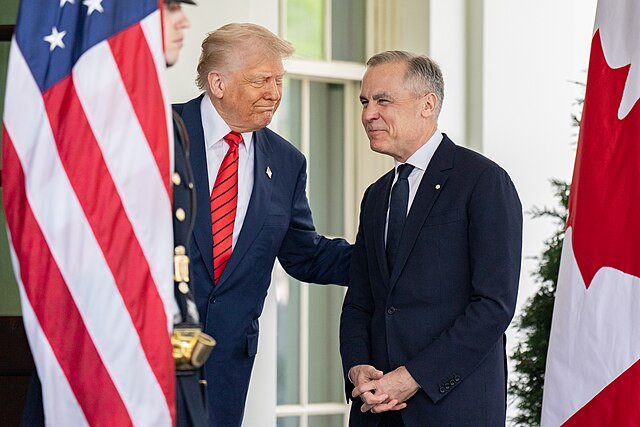
The announcement sharply contrasted with the cordial images of Trump and Carney at Sunday's World Cup final. The two leaders appeared relaxed during the event, although the White House said their interaction wasn't intended as a formal trade negotiation.
An administration official, speaking anonymously while previewing the policy, said Canada was among the few countries besides China to retaliate against Trump's earlier tariffs and should therefore face additional consequences. The official also said the president had directed advisers to consider further trade measures tied to Canadian wildfires.
The new tariff package will affect some products that had previously received preferential treatment under the United States-Mexico-Canada Agreement. According to the administration, those protections ended after the 2020 agreement expired and the three countries entered negotiations over replacement terms.
Trump's proclamations focused on several longstanding commercial disputes, including:
- Canada's 25% tariff on certain U.S. vehicles that didn't qualify for preferential trade treatment.
- Decisions by some Canadian provinces to suspend purchases and sales of American alcoholic beverages.
- Canadian restrictions affecting U.S. dairy and cheese exports.
- The economic and environmental effects of smoke from Canadian wildfires crossing the border.
Trump has increasingly connected the trade dispute to air pollution, accusing Canada of allowing wildfire smoke to damage air quality in the United States. Following his encounter with Carney, Trump said he told the Canadian prime minister: "You've got to stop these fires from coming in and poisoning our air."
"I have a good relationship with Mark Carney, but you know, we got to stop the fires up there," Trump added.
The president also raised the prospect of seeking financial compensation from Canada for the effects of the smoke. "If we can help them, we'll help them, but maybe they should pay us some damages or something, or should do some tariffs," he said.
Days earlier, Trump wrote on Truth Social that Canada wasn't properly managing its forests and claimed the United States was being "invaded by filthy, polluted, and unhealthy air, the quality of which is dangerous, and totally unacceptable." He called the economic cost "incalculable" and said it "must of necessity be added to the tariffs Canada is currently paying."
Carney responded by defending Canada's trade policies and signaling that Ottawa remained open to negotiations while preparing to protect domestic industries.
"Canada believes in the benefits of free and fair trade, as evidenced by our new government signing more than 20 new economic and security partnerships," Carney said.
"This trade dispute has raised costs for families, particularly in the US Canada stands ready to engage intensively to address outstanding issues with the US to the mutual benefit of our citizens," he added.
Carney also pledged government support for households and businesses that could be affected by the tariffs. "In all circumstances, Canada will work relentlessly and take any measures necessary to build our strength at home and to support Canadian workers, farmers, businesses, and families."
Ontario Premier Doug Ford called for a direct Canadian response should the tariffs proceed. "If these tariffs proceed, Canada should respond tariff for tariff, dollar for dollar," Ford wrote on social media.
The exemptions for energy products and critical materials could limit some of the immediate disruption to supply chains that are closely integrated across the border. Canada remains a major supplier of energy and industrial inputs to the United States, making those exclusions significant for manufacturers and consumers on both sides.