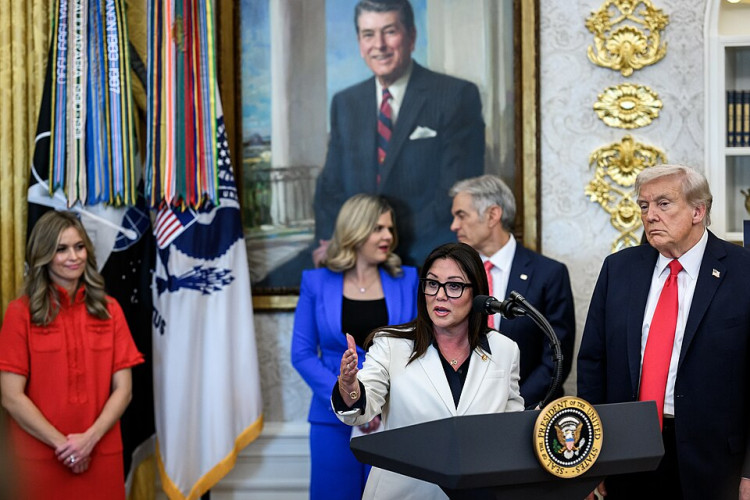
Former Labor Secretary Lori Chavez-DeRemer repeatedly violated or acted inconsistently with Labor Department policies governing workplace conduct, alcohol, travel, government resources and gifts, according to an inspector general investigation that describes employees working in an atmosphere they called "toxic, intimidating and humiliating."
The Labor Department's Office of Inspector General detailed its findings in a 44-page report following an investigation that began Jan. 6 after an anonymous complaint raised allegations involving Chavez-DeRemer and other senior officials. Investigators interviewed 53 current and former Labor Department employees, along with an employee from another federal agency, and reviewed more than 500 documents, photographs and videos.
Chavez-DeRemer, who led the department from March 2025 until resigning in April 2026, was found to have violated or acted inconsistently with department rules in six areas. The investigation examined workplace harassment, an alleged inappropriate relationship with a protective-detail official, alcohol consumption, use of government resources, travel and acceptance or reporting of gifts.
Some of the report's strongest findings concern conditions inside the Office of the Secretary. Thirty-eight witnesses characterized the workplace as "toxic, intimidating and humiliating," according to investigators, who described senior officials discussing employees' performance and personal reactions in front of colleagues, including whether staff members had cried during meetings.
Employees also described an atmosphere in which some workers feared being fired. The OIG concluded that Chavez-DeRemer failed to comply with Labor Department requirements intended to prevent and address workplace harassment, while other senior officials also engaged in conduct inconsistent with those policies.
The finding has an important legal limitation. Investigators didn't conclude that the conduct amounted to unlawful discrimination, retaliation or a legally actionable hostile work environment under federal employment law. Instead, the report assessed whether Chavez-DeRemer and other officials complied with the Labor Department's own workplace policies and standards.
One of the investigation's most unusual episodes involved a personal trip Chavez-DeRemer made to Oregon in April 2025. Investigators said she sought an off-the-record visit to an establishment featuring partially nude dancers while accompanied by members of her government protective detail.
According to the OIG, Chavez-DeRemer gave money to an agent and instructed him to provide it to a performer. She later directed the agent to drop additional bills "one-by-one" on the performer's body, the report said. The agent objected before complying after consulting a more senior security official.
The OIG said Chavez-DeRemer had developed what investigators characterized as an "inappropriately close and unprofessional relationship" with an official assigned to her protective detail. Investigators said they lacked sufficient direct evidence to establish that the relationship was romantic or sexual, but concluded that aspects of it were inconsistent with federal standards concerning impartiality and preferential treatment.
Alcohol consumption inside Labor Department offices emerged as another significant issue. Witnesses told investigators that Chavez-DeRemer and two senior aides regularly consumed alcohol in her study during working hours, while some employees said they were pressured or mocked when they declined to participate.
Investigators found alcohol bottles in areas controlled by the officials and said they couldn't locate the written authorization required for alcohol consumption inside the Francis Perkins Building. The report therefore concluded that the conduct violated or was inconsistent with department alcohol policies.
The investigation also found that government employees performed a series of personal tasks for Chavez-DeRemer while on duty. Her personal aide and executive assistant were directed to use government transportation to travel to her residence during working hours and organize her bedroom closet, according to the report.
Those duties included hanging laundry and dry cleaning and arranging clothing, shoes and purses. Employees were also instructed to retrieve personal packages, purchase items and alcohol, coordinate with movers and arrange house-cleaning services, investigators found.
Gift-reporting practices also came under scrutiny. At least five gifts received by or for Chavez-DeRemer weren't included in the department's gift-tracking records, according to the OIG. The items included work boots, baby gifts, cowboy hats, a scarf and an alligator-hide wallet valued at approximately $200.
Chavez-DeRemer's attorney, Nick Oberheiden, disputed suggestions that his client had engaged in illegal activity. "Secretary Chavez-DeRemer did not violate any law," Oberheiden said in a statement to NBC News, adding that she has since "successfully pursued new projects as a private citizen."
Chavez-DeRemer resigned April 20, before investigators completed their work. Her attorney subsequently declined to make her available for another interview, according to the inspector general.