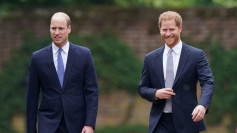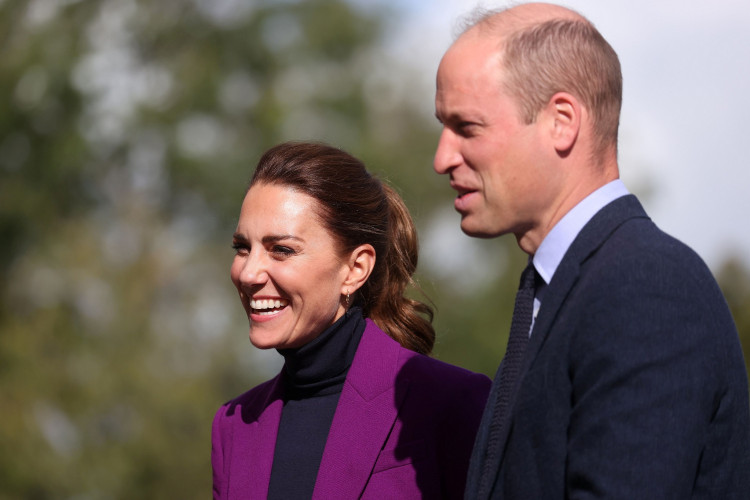
Prince William and Catherine, Princess of Wales, are confronting a new challenge in the digital age as artificial intelligence-generated images depicting members of the Royal Family in fabricated scenarios spread across social media, prompting renewed concerns about privacy, misinformation, and the growing difficulty of distinguishing fact from fiction online.
The issue has drawn attention from royal commentators and media observers who warn that advances in generative AI are creating unprecedented risks for public figures. The concerns come as the Prince and Princess of Wales remain among the most closely scrutinized members of the British monarchy, with public interest in their personal lives frequently fueling online speculation.
The latest debate follows a turbulent period for Kensington Palace. Public discussion about the authenticity of royal imagery intensified in 2024 after Catherine underwent abdominal surgery and temporarily stepped away from public duties. Despite official statements indicating she would not return to work until after Easter, online rumors continued to circulate before the Princess later disclosed that she had been diagnosed with cancer and was undergoing chemotherapy treatment.
That episode exposed how quickly speculation can flourish when information is limited. According to former BBC royal correspondent Jennie Bond, artificial intelligence has now added another layer of complexity.
"Yes, it really is a problem - and it seems impossible to know how to solve it," Bond said.
The concern centers on increasingly realistic AI-generated photographs that appear to show Prince William, Princess Catherine, and their children participating in events or activities that never occurred. Some images have reportedly depicted royals endorsing products, appearing in fabricated settings, or participating in fictional scenarios designed to attract online engagement.
Unlike earlier forms of digital manipulation, many of today's AI-generated images are sophisticated enough to deceive casual viewers. Advances in image-generation software have dramatically lowered the technical barriers required to create convincing visual content, allowing fabricated images to spread rapidly across social platforms before they can be challenged or verified.
For the monarchy, whose public standing is closely tied to image and perception, the implications extend beyond simple embarrassment.
"Image is important for the monarchy," Bond explained. "They used to hate the idea that it mattered, but they are more PR savvy these days, and they concede that it does."
She warned that repeated exposure to fabricated content could gradually shape public perceptions of individual royals.
"If false information and lifelike pictures are circulated, their image in the public eye will be altered and quite possibly damaged," she said.
The concerns echo broader debates taking place across governments, technology companies, and media organizations worldwide. As AI tools become more accessible, policymakers are grappling with questions about image rights, misinformation, and the responsibilities of platforms hosting synthetic content.
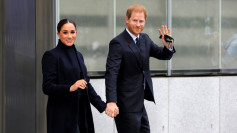
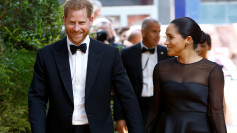
The discussion has also resonated within the Royal Family itself. Earlier this year, Prince Harry and Meghan Markle joined a group of public figures supporting an open letter directed at major technology companies including Google and Meta. The initiative urged caution regarding the development of increasingly powerful AI systems.
As part of the effort, Prince Harry issued a warning about the direction of artificial intelligence.
"The future of AI should serve humanity, not replace it," he said. "I believe the true test of progress will be not how fast we move, but how wisely we steer. There is no second chance."
For Bond, however, the issue is as much about privacy as it is about technology. She argued that realistic fake images can create a significant intrusion into the lives of people who are already subject to extraordinary levels of public scrutiny.
"It also seems like a gross invasion of their privacy, indeed of anyone's privacy, if pictures that seem so real are shared," she said. "And, of course, if you're royal, they'll get shared big time."